The Wheatley
School Alumni Association Newsletter # 284
French vs. US Cultural Differences; Charity
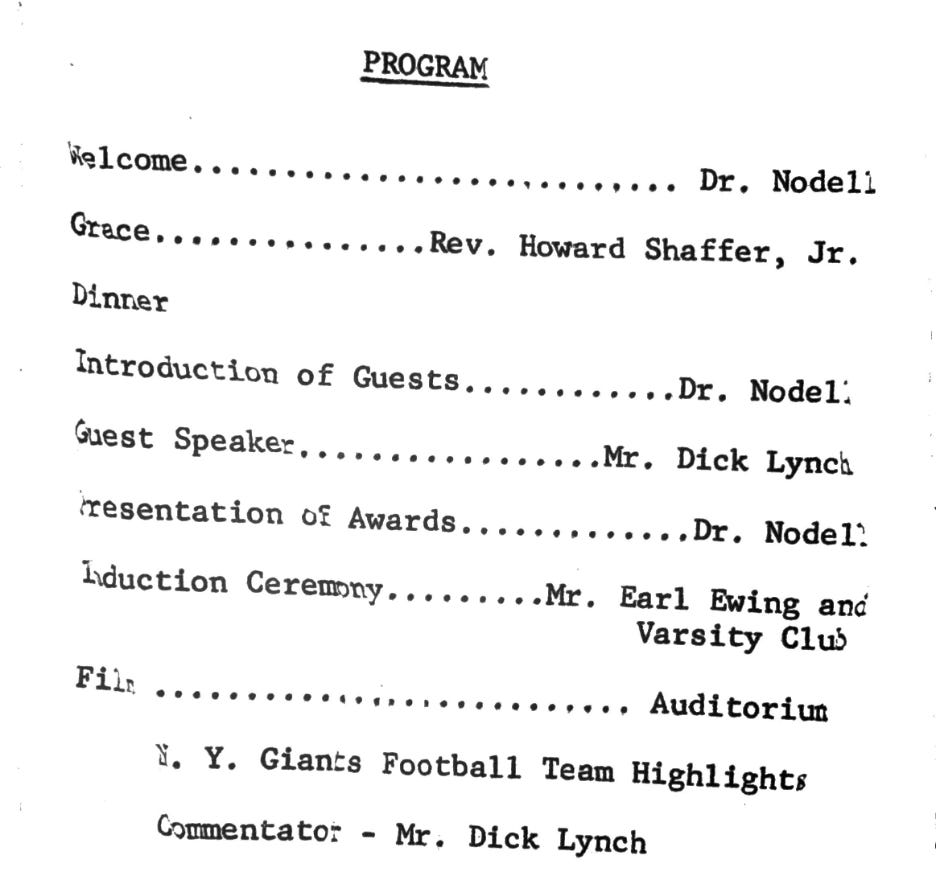
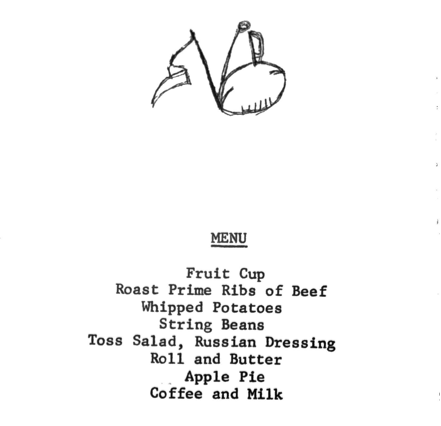
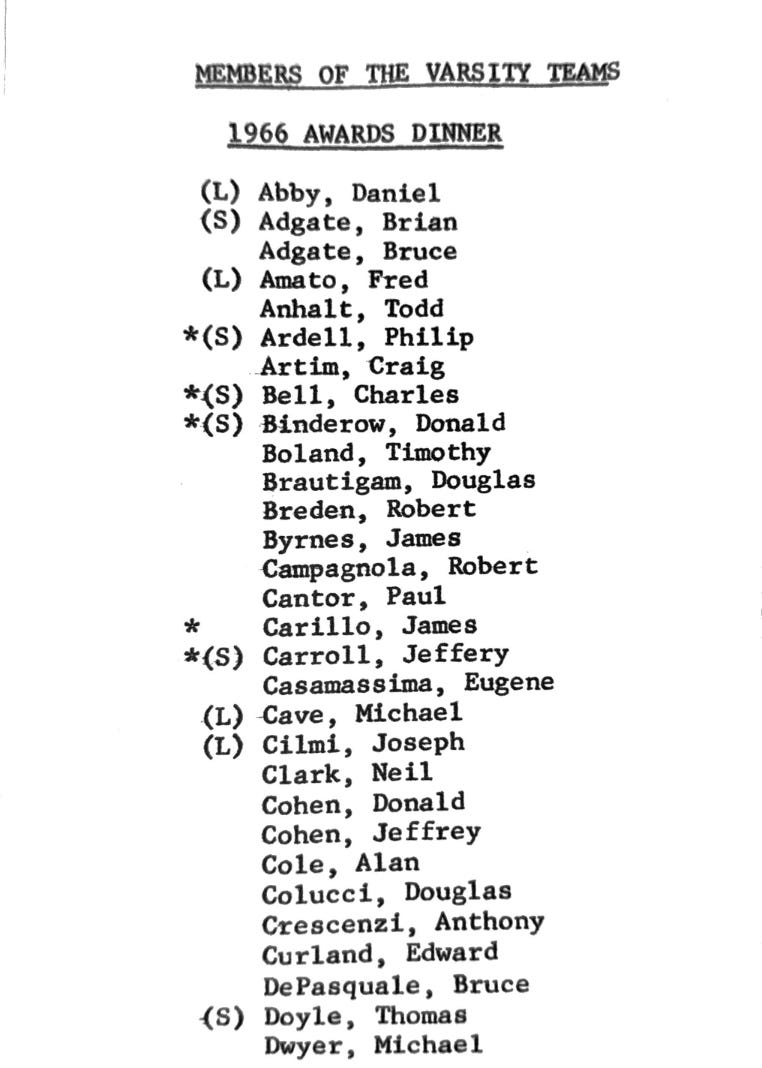
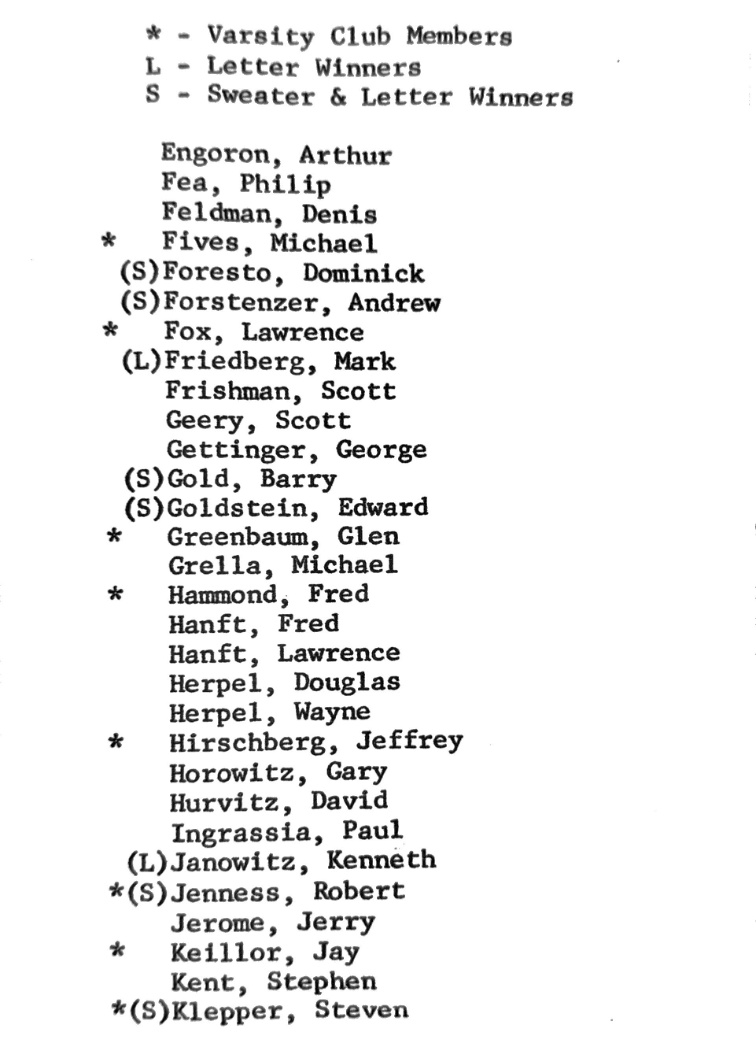
Event Friday; Mary Lee Holley Cerillo; Athletic Banquet in 1966; Jill Simon
Forte; Laurel Brandt; Kenny Gallard; Rick Weissman + friends; Charles Berlin
|
|
|
Dear Wheatley Wildcats and Other
Interested Persons,
Welcome to the Wheatley School
Alumni Association Newsletter # 284.
Cultural Differences: France vs. the U.S.
Claude Lévy (1966) Writes - “The garage door opened automatically, thanks to a
little device in the car. Mrs. Gross, whom I would soon call “Mom,” picked me
up from the American Field Service (“AFS”) orientation in the city, and drove
me to my new home in Roslyn Heights. I knew I had really arrived in the
United States! I remembered how amazingly sci-fi this feature looked in the
Jacques Tati’s film Mon Oncle, and there it was in real
life. On what I thought was the 1st floor - which I was to learn later is
called the “second floor” in the US - I was shown my bedroom, which I would
share with my American “brother” Bob. Opposite the hallway was the live-in maid’s
room (I don’t think they used the word “housekeeper” yet) and, to my
surprise, she had a TV just for herself. That was incredible to me. Every
morning, when I came downstairs for breakfast, she would ask me how I wanted
my eggs, a new experience for me.
I continued discovering
this new culture. In the early 2000’s, when I volunteered to train AFS
students for stays abroad, one of the things the information booklet I was
given stated: “An American is not a Frenchman who speaks American English.”
It’s really another approach to life, and understanding intercultural mores
is one of the main goals of the AFS program.
As the 60th anniversary
of the 1966 class is to take place soon, I was wondering if it would be of
any interest for the Newsletter’s readers to have a chance to see how a then
17-year-old Frenchman experienced the American way of life. Art gave me the
green light.
I will focus on a
comparison between American and French cultures the way I perceived the
differences in 1965–1966. (I will try not to repeat what I already published
in previous issues of the Newsletter.)
Between my arrival in
mid-August 1965 and my starting school, my new family did their best to
entertain me, show me around, and facilitate some social connections. I
became aware of an example of a strong cultural difference when friends of
theirs, who appeared very well-off, invited us for dinner and served
hamburgers. This was typically the kind of dish that was only just starting
to become popular in France, but was only available in the small number of
fast-food places. It was definitely not what I thought a well-off family
would serve. Don’t get me wrong, I love hamburgers, especially when they are
not over cooked!
Dress codes, or lack
thereof, also surprised me. I was amazed by the number of men wearing shorts,
which was definitely not usual attire for French adults, except when engaging
in sports. Speaking of sports, I was totally lost when they took me to a baseball
match, though they tried to explain its rules prior to the game. In all
fairness, though several others have tried to explain me the rules since
then, I still have not become a baseball fan, which I understand is totally
un-American.
But the core of my
American experience was school, and as this Newsletter audience is
essentially made of Wheatley alumni, I guess I should emphasize this specific
part of my recollections.
Generally speaking, the
two main differences with the French system were the possibility to choose
your subjects, and the fact that if you failed one of them, it wouldn’t
prevent you from moving up to the next grade.
In the mid-60s, a French
senior who planned to study beyond high school level would have to choose one
of these majors: math, experimental sciences, or philosophy. Classes usually
started at 9 a.m. and ended at 5 p.m., with a 2-hour lunch break (not that we
were served 10-course meals!). We noticed that they often served spinach the
day after they mowed the lawn, but maybe we were biased. There was no school
on Thursdays.
Science was not my forte,
so I chose philosophy, with music and German as electives. Coming from that
system, it was wonderful for me to be able to arrange with Assistant
Principal Mr. Colin Bentley a program that included American history,
orchestra, world literature, lunch (no offense, not my best recollection as a
fussy Frenchman), typing, sociology, music theory, science, and phys. Ed.
Yes, typing. This was
only taught in French schools to students, overwhelmingly female, who didn’t
plan to go to college, but were to become secretaries. I loved this class and
would quickly type everything I wrote. I wasn’t great in gym. I believe it’s out
of the goodness of his heart that Mr. Lawson gave me a final B, but I don’t
know if I actually deserved it. I discovered this when I received my report
card, which looked extremely futuristic to me as reports were written by hand
in French schools. Speaking of technology, I marveled at the PA system, which
we didn’t have in my French school either.
I was amazed that there
was such a class as world literature when the French system, as much as I
remember, was only interested in teaching French literature.
I was also fascinated by
the way 20th century history was taught, which allowed room for debate. One
assignment was about the pros and cons of dropping an atomic bomb on
Hiroshima, two students defending opposite points of view. Also, as the
Vietnam war was going on, there was no taboo in speaking of it. In the French
system, the history of humanity seemed to have stopped in 1945. There was a
de facto censorship about the Algerian war of independence, which the French
government minimized by calling it “the Algerian events.”
I was amazed by the way
romantic relationships were spoken of in our sociology class. Not that this
topic did not interest French teenage kids, but we wouldn’t have had these
conversations in the classroom, under a teacher’s supervision. I had been
assigned an essay on love in France and in the US. What did I then know? I
wasn’t especially precocious in this matter. Mr. Loring asked me to present
my research to my fellow students. One of them asked, ‘is it true that French
girls are beautiful and easy, and that French boys are gifted for sex?’
C’mon! I answered that I couldn’t generalize about French girls, and that I
lacked experience as a boy. I believe they liked my answer.
Romantic relationships
were also one of the topics Mr. Agatstein asked me about when he interviewed
me towards the end of the school year. Recently, I brought the reel-to-reel
tape of this interview to the US, but I haven’t been able to find a device to
play it on, and I need to have it digitized. Would someone be able to help me
with this?
Double dates and
drive-ins did not exist in France. I would have loved to take driver’s ed,
which was not offered in French schools, but I didn’t have the right to drive
due to an AFS regulation.
However fantastic and
useful they were for me, I will not write again of the music classes, as this
part of my story was already published here.
As a foreign exchange
student or, in other words, as a guest of the US, I was not supposed to get
involved in my host country’s politics and policies. This did not prevent me
from noticing several things that were totally different from the French
customs. At home, we did not have French flags in the classrooms, and there
was no such thing as a Pledge of Allegiance. At Wheatley, I was instructed to
stand up out of respect, but I had the right to remain silent. God had no
space in the public schools in France. It’s only much later that I learned
this had only been introduced in 1954 in the US. When I got invited to the
Roslyn High School graduation by my American girlfriend (who, many years
later, became my wife), both a pastor and a rabbi blessed the students in
that officially non-religious school, which would have been totally unheard
of and inappropriate in France. I wonder if this ever happened or was
considered at Wheatley.
Aside from the school
system, I was and, to be honest, still am, amazed at the fact that
politicians usually end their speeches with “God bless America,” infringing
on the First Amendment to the United States Constitution, and its right to
follow no religion. But I may be wandering off the main topic of the story.
Let me go back to the
school system. In France, if you don’t get satisfactory grades at the end of,
say, your junior year, you won’t move to the 12th grade. You just have to go
through the whole syllabus of 11th grade again. From what I understood, if you
had a problem in a specific subject matter here, you would just have to take
that subject matter level again the next year instead of the level above it,
which made sense to me.
I also figured that one
could say that in France, you go to such or such a school, whereas
in the US, you belong to the school. This spirit may be built into sports
teams and events, much more important in the US than in France. Most
Frenchmen find the cheerleader system a bit ridiculous, but I guess it works.
School rings are also unheard of in France, as well as yearbooks.
The very existence of a
student government also impressed me. We did have elected “chefs de classe”
(class leaders) back home, but they hardly had a say in the life of the
school. Only in 1969, in the aftermath of the student movement of the
previous year, would we have “délégués de classe” (class delegates), who
would sit in on the school board of directors meetings and cast votes on
major issues. Back in 1965, I thought that having school political parties
and candidates was a great way to train students to take part in political
life when becoming adults.
And, of course, there
were the end of high school events like the “banquet” and the prom. For a
Frenchman, a “banquet” is a huge meal where quality pairs up with quantity.
Not exactly what I experienced in 1966, but I was impressed by the fact that
the school leadership team delivered speeches.
I understood that
graduation was a very important ceremony at the end of senior year. I had
seen films of such colorful events, and there I was, wearing the cap and gown
that had looked so exotic to me prior to my American experience. Several days
of rehearsals for an event that, from conversations I had with some of my
classmates, was actually much more important for their families than for
them.
When I left Roslyn
Heights to join an AFS bus trip prior to sailing back to France on the “Seven
Seas,” the garage door had been moved, as a pool room had replaced the
garage. Many biases about American culture had been transformed by my
experience, and both my staying with the Gross family and being a student at
the Wheatley school would be an important part of who I was to become as an
adult.
I am aware that things may have
changed on both sides of the Atlantic Ocean, and that what I experienced at
Wheatley was partly due to the socioeconomic environment of that area. My
sources are my personal recollections, and the journal I kept sixty years
ago.
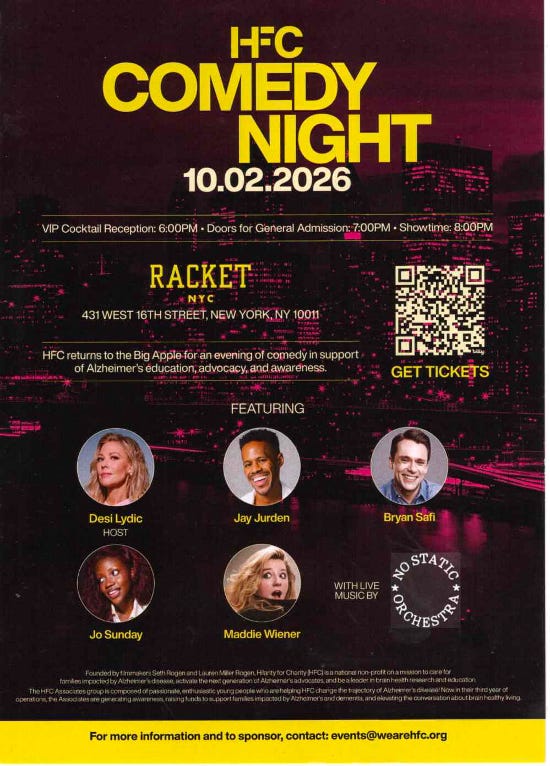
Hilarity for Charity Event - 10/2/2026
Richard I Schwarz (1967) Writes - “My daughter, Laura Dasher, is organizing an HFC
(Hilarity for Charity) event for Friday 10/2 in Manhattan.
HFC is a wonderful
organization that supports Alzheimers victims and their families. It was
established by Seth Rogen and his wife Lauren, whose mother died from this
horrible condition.
The Lorraine and Richard
Schwarz Family Foundation has been supporting HFC for years. This is the 3rd
comedy night event that Laura has organized, and it’s really a fun time!
The October 2nd event
will be hosted by Desi Lydic, who just won an Emmy as a cast member on the
Daily Show.”
|
|
Graduates
1963 - Mary Lee Holley Cerillo - “I vividly remember my Dad, who advertised for
Capitol Records, arriving home from work one day and announcing to me that
there was a British group called “the Beatles,” who, he predicted, were going
to be a tremendous hit in the United States and were going to be on the Ed
Sullivan Show. Dad also advertised for Zildjian cymbals, and he actually
carried the cymbals on the subway to NY for their performance. I was
fortunate enough to get many freebies from Dad, including the original
Beatles record album. I also have albums from the Mammas and Pappas, Simon
and Garfunkel, The Kingston Trio, The Supremes, etc. At the time, I didn’t
appreciate his enthusiasm, but looking back on it, Beatlemania was quite something,
and his predictions came true. The sixties were an amazing time for music,
and I was lucky that my Dad advertised for Capitol Records during that time.”
1964 - Author James Kirchick, the
son of Billy (1969) and the nephew of Howie (1967), was also the nephew of
Calvin, 1964. Calvin passed away in 2008.
1964 - Wendy Wolf - “Hi Artie,
I have mixed feelings
about my time at Wheatley. I had a lot of angst and a lot of fun. I had great
friends, but at times, my teenage insecurity got to me. Many classes bored
me, but many others stimulated me.
I am about to turn 80 in
a few weeks, and I cannot believe it. I am very grateful to have good health
so far!
I live in Mahopac, in
Putnam County, NY. I have 2 children, one in Los Angeles and one near
Kingston NY. I lost my husband over two years ago, and I am still adjusting.
I am active in politics. I teach Gentle Yoga part-time, both online and in
person, a combo class. Any Wheatleyite is welcome to take a complimentary
class online. Just email me at wendywolf6@gmail.com”
1966 - Claude Lévy and Marta Pesa
and other AFS Foreign Exchange Students
|
|
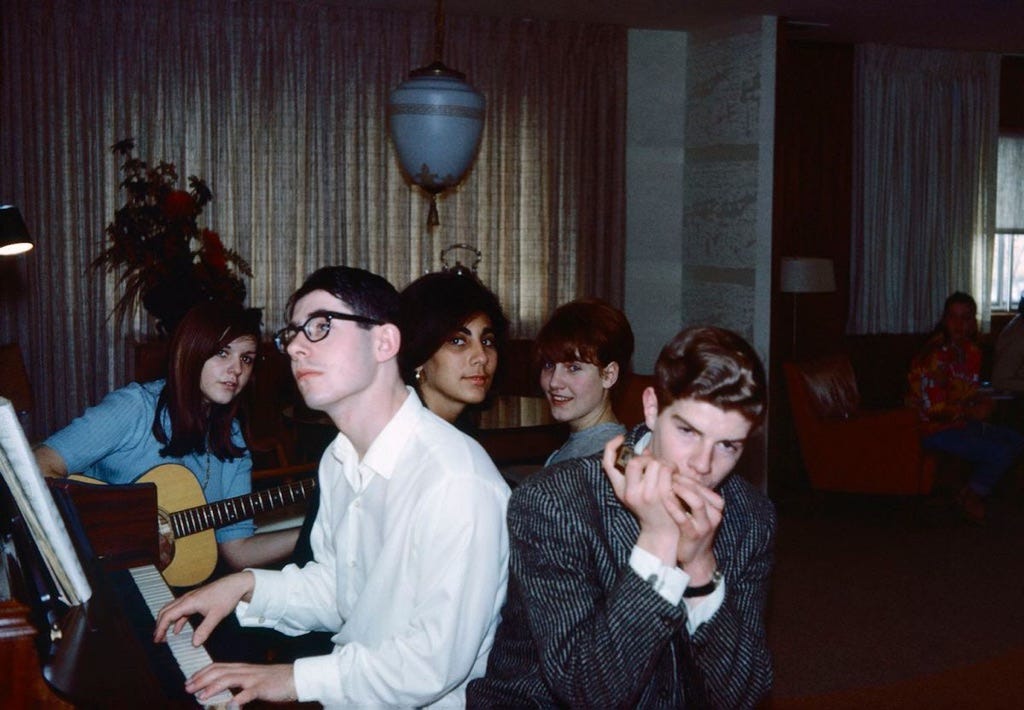
L-R - Alicia
Fingerhut (Spain); Claude Lévy (France) (Wheatley): Marta Pesa (Argentina)
(Wheatley): Wilma Campanelli(?) (Italy); Richard Mason (England) (Roslyn).
Does anyone know what
school(s) Alicia and Wilma attended, and/or the correct spelling of Wilma’s
last name?
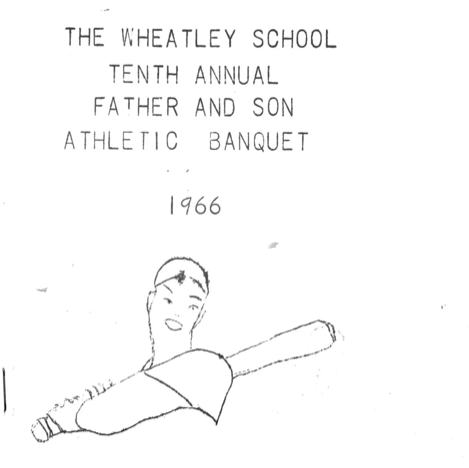
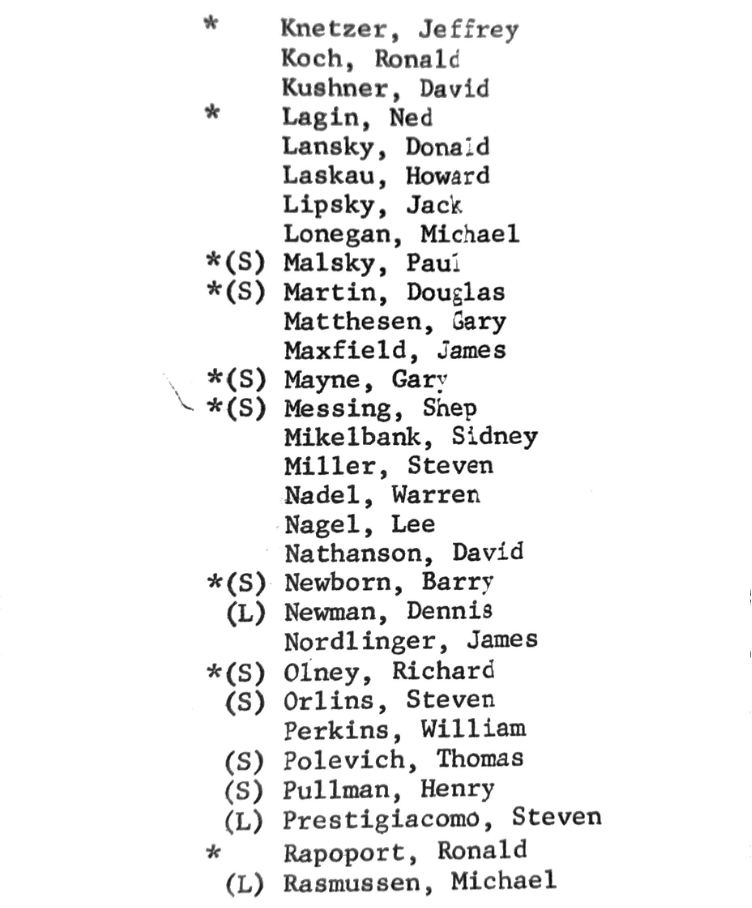
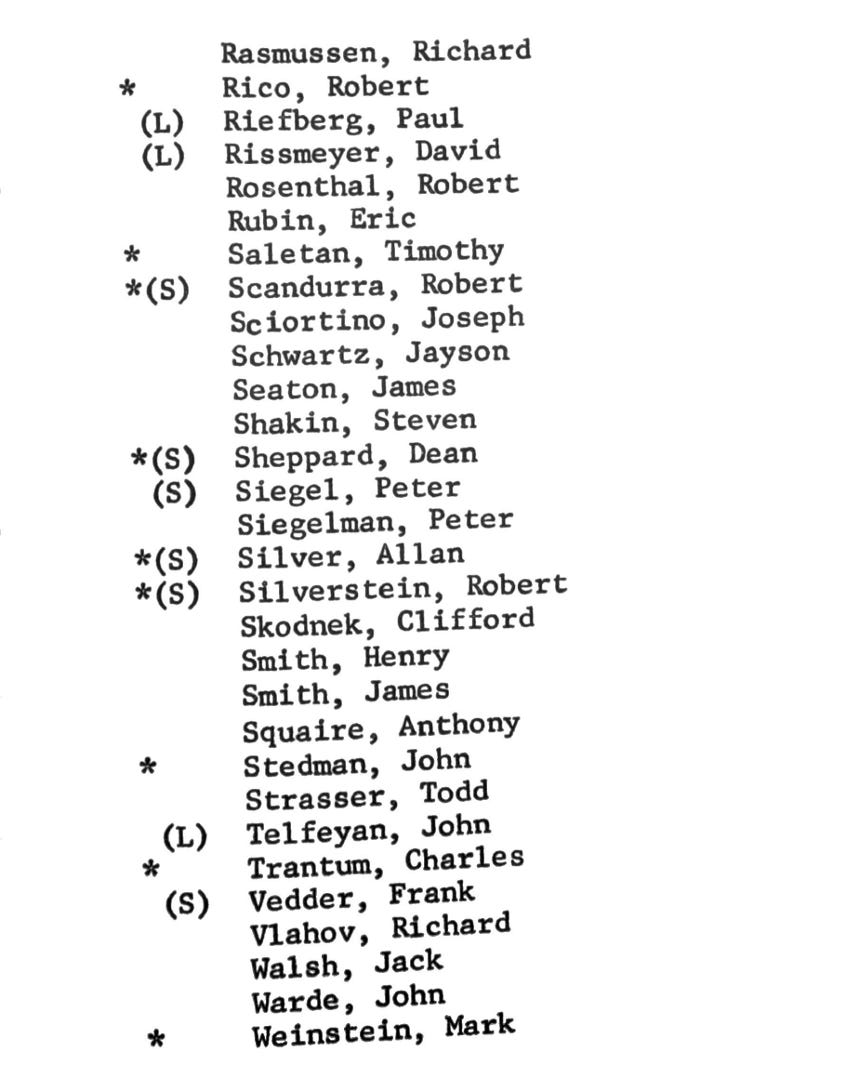
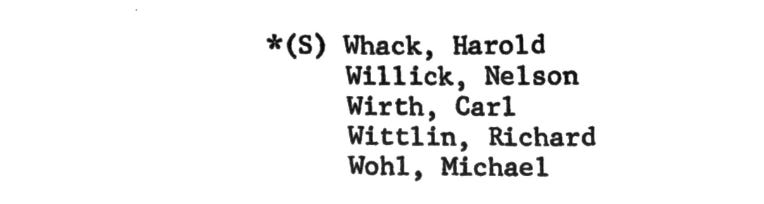
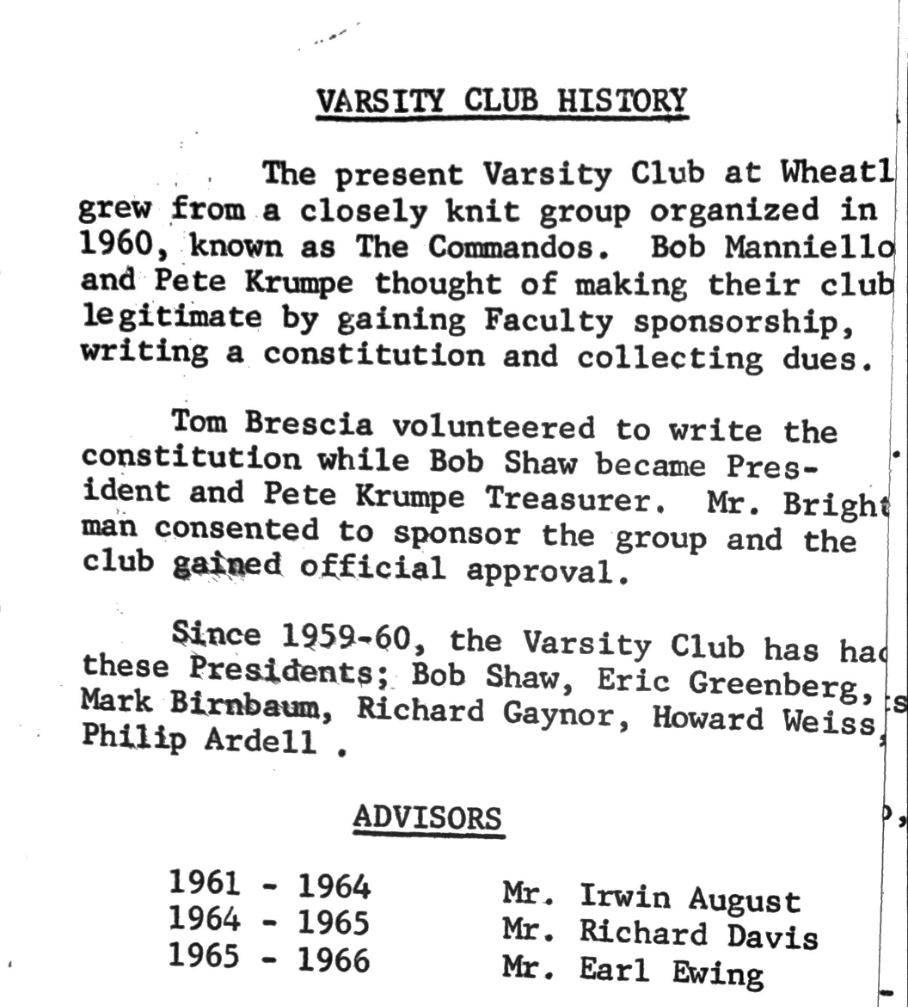
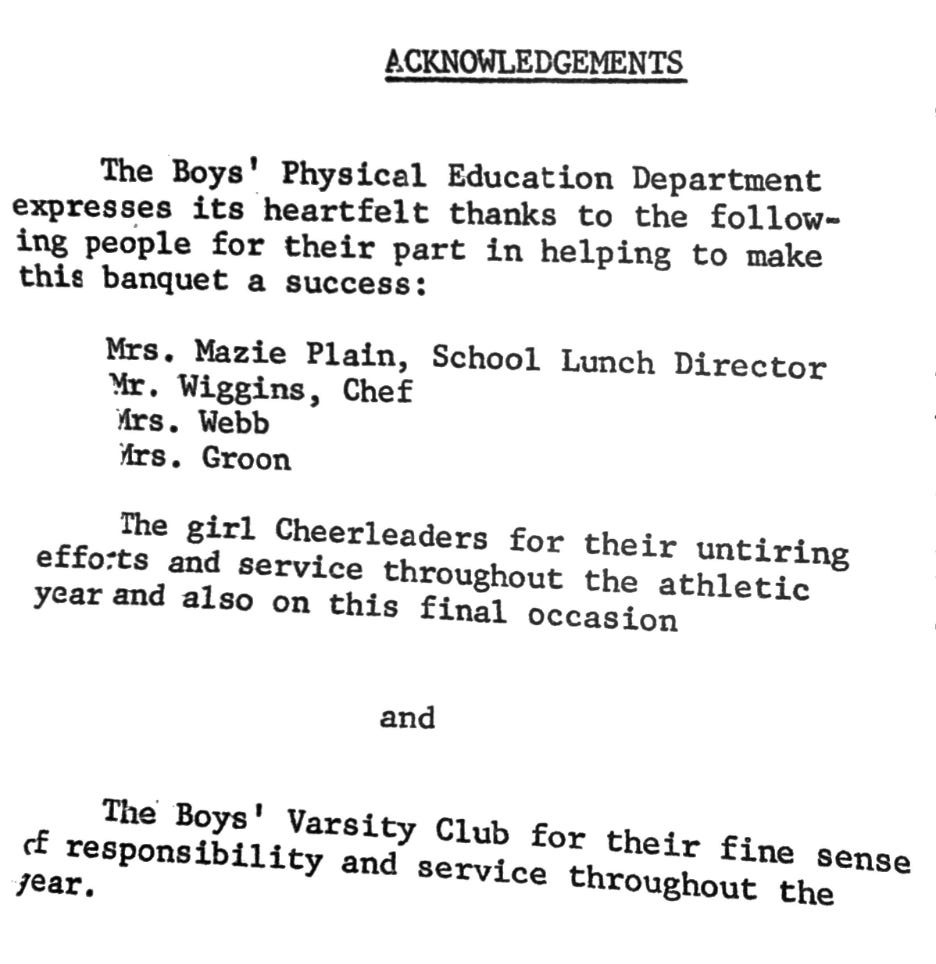
1967 - Dominic Foresto Athletic
Memorabilia
Paula Panzeca Foresto (1969) -
Writes - Hi Art!
I’ve been going through
some of Dom’s Wheatley Memorabilia, and I found this 60+ year old gem. I hope
it brings a smile to those that attended, or those that may remember some of
these names from the past.. It certainly brought one to mine.
Best,
Paula Foresto ‘69
|
|
|
|
|
|
|
|
|
|
|
|
|
|
|
|
|
|
|
|
1967 - Jill Simon Forte -
“I didn’t learn much at Wheatley,
but I sure had a good time!!! And getting to meet and marry Bob Forte
(1965) was the best thing that could have ever happened to
me!
Best husband ever!
And I was glad to see my friend from back then, Jane
Colchamiro (1967, Roslyn High School), with whom I still
communicate 😊.”
1968 - Laurel Brandt - “In 7th or 8th grade, my section had science with a
teacher, Mr. Busby, who was confined to a wheelchair, perhaps
from polio (although I don’t recall ever being told). Our classroom had high
black science tables, and each of us had a dedicated laboratory book. One
day, on top of a high table, someone’s lab book caught fire from a Bunsen
burner. Most of us were frozen, including the teacher. But a classmate, Kenny
Gallard, jumped up on the table and stomped out the fire!
Though it was more than 60 years ago, I remain impressed with his quick
thinking!!
I’m curious whether
anyone else remembers this event.
Stay well.
Laurel”
Kenny Gallard (1968) Responds - “Wow! Somebody actually remembers me from 62 or 63 years
ago?? That’s amazing.
I have only a vague
recollection of this event. But I vividly remember Laurel
Brandt and Mr. Busby.
Best to all!
Ken
1974 and 1975 - Guys Gather
|
|
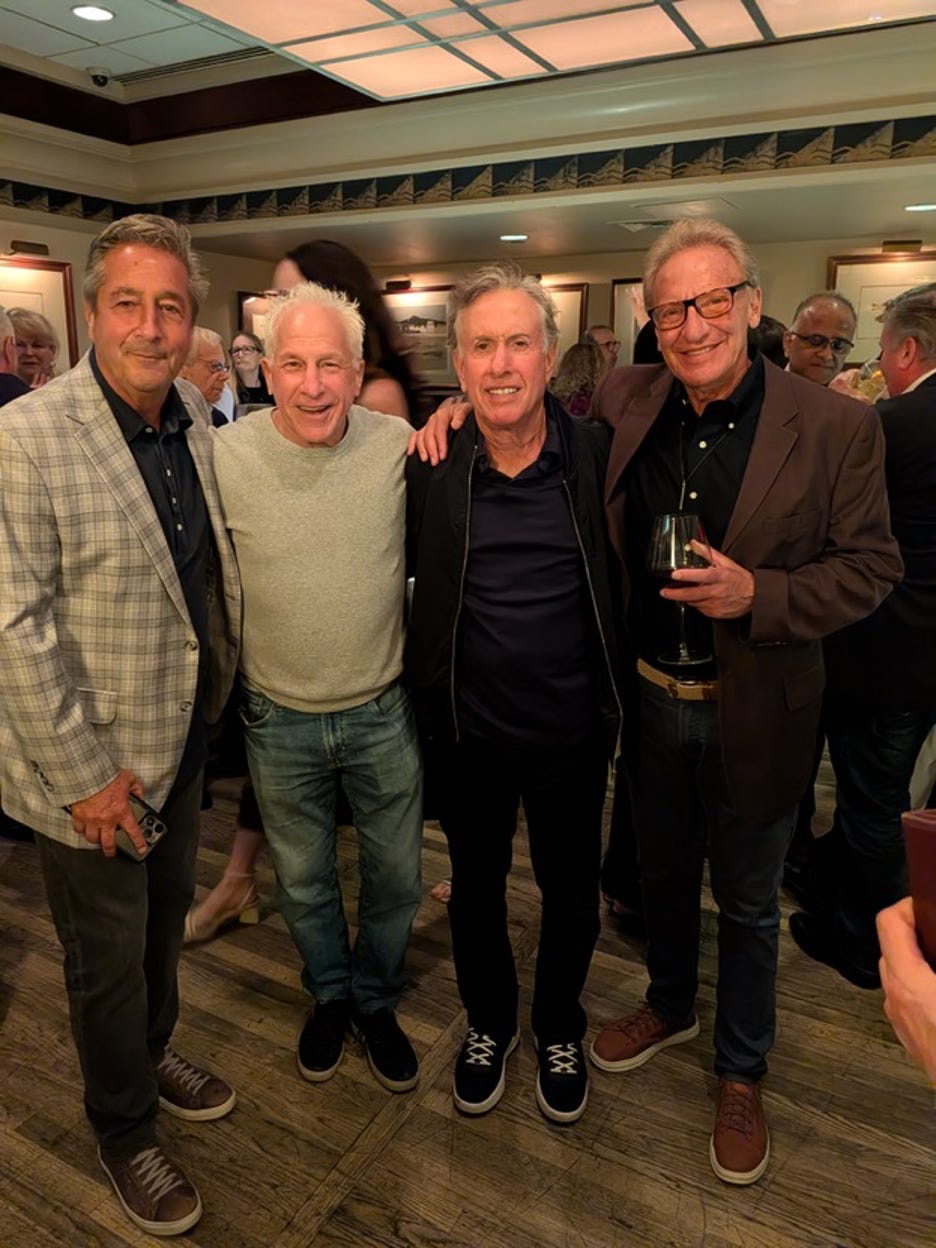
L-R - Andy Orshan, Mitch
Rieders, Andy Schwartz, Mike Sadowsky (all 1975) gathering in Docks, NY, to
celebrate the birthday of Rick Weisman (1974).
Best,
Pete Berlin
Robert Vincze (1975) Writes - “Chuck Berlin was a kind soul”
Back Then-Willets Rd. Kindergarten 1955
|
|
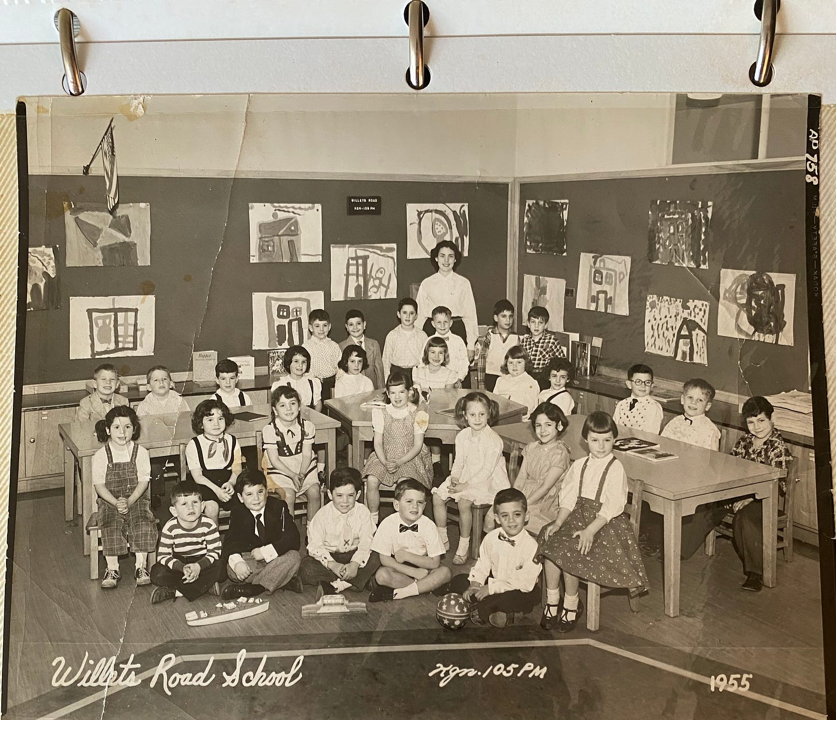
Laurel Brandt (1968)
Writes - “The little boy seated
third from the left (as you look at the photograph) (light shirt, dark
suspenders) in the back row (of sitters) of the Willets Road 1955
kindergarten photo is my cousin, MICHAEL BRANDT. Mike left for private school
after 6th grade at WRS. He would have been in the Class of 1967.”
Further identifications,
anyone?
Fan Mail
1964 (Richard Ilsley) - ❤️
1964 (Davida Tunis Philips) - ❤️
1964 (Wendy Wolf) - “ Thank you so much for keeping us all informed of our
classmates and bringing back memories.”
1966 (Deborah Simmons Moore) - ❤️
1967 (Jill Simon Forte) - “Thanks as always. I smile whenever I see the
Newsletter pop up. You do a great job helping us remember good (and some bad)
times.”
1969 (Paula Panzeca Foresto) - ❤️
1978 (William Haft) - ❤️
The Usual Words of Wisdom
All underlined text is a
link-to-a-link or a link-to-an-email-address. Clicking anywhere on underlined
text, and then clicking on the text that pops up will get you to your on-line
destination or will address an email.
Thanks to our fabulous
Webmaster, Keith Aufhauser (Class of 1963), you can regale
yourself with the first 282 Wheatley School Alumni Association Newsletters
(and much other Wheatley data and arcana) at our website:
The Wheatley School Alumni Association Website
Also thanks to Keith is
our search engine, prominently displayed on our home page: type in a word or
phrase and, wow!, you’ll find every place it exists in all previous
Newsletters and other on-site material.
I edit all submissions,
even material in quotes, for clarity and concision, without any indication
thereof. I cannot vouch for the accuracy of what people tell me, as TWSAA
does not have a New Yorker style Fact-Checking Department.
We welcome any and all
text and photos relevant to The Wheatley School, 11 Bacon Road, Old Westbury,
NY 11568, and the people who administered, taught, worked,
performed, and/or studied there. Art Engoron, Class of 1967
Closing
That’s it for The
Wheatley School Alumni Association Newsletter # 284. Please send me your
autobiography before someone else sends me your obituary. ⏳