Wheatley Football
(Redux)
Paul Giarmo (1976) Writes - “Hey, Art, In reference to Melanie
Artim’s (1974) comment in Newsletter Issue # 249 regarding
her older brother Craig Artim’s (1969) football
exploits, here are the facts:
On Saturday, October
28th, 1967 at Wheatley, our illustrious Wildcats defeated the Nyack (upstate
New York) Redhawks by the score of 37-6, in an MAAPS (Metropolitan Athletic
Association of Public Schools) League game.
Craig, then a junior, scored three touchdowns on runs of one,
eight and 11 yards, (totalling 18 points); while Jim
Maxfield (1969) and Mitch Laskey (1968)
added one touchdown each, to build a 31-0 halftime lead.
Quarterback Mike
Rasmussen (1969) had a good game as well,
completing 9 of 12 passes.
Our Wildcats finished
that year (1967), our first in the MAAPS League, with a record of 2 wins and
6 losses.
The following year, 1968,
saw the Wildcats improve to a 3 win, 3 loss and 1 tie record in the MAAPS.
That year, Wheatley traveled up to Nyack on Saturday, October 26th, and beat
the same Redhawks by the score of 30-0.
Bruce Artim (1971) also played football for Wheatley in 1969 and 1970;
but that was under head coach Pat Oleksiak, when the Wildcats returned to
Conference 4 of the North Shore Athletic League.
Paul (“Spirit of ‘76”) Giarmo”
Responses to “Racism on Long Island” Essay
(in # 252)
John Corwin (1964) - Writes - “The racism article was fabulous. So interesting that
so many of us were oblivious.”
Barbara Smith Stanisic (1967)
Writes - “Thank you for the
wonderful examination of racism. It goes to prove that with hard work and
determination, no matter what color you are, you can succeed.”
Jack Wolf (1967) Writes - “Some time ago, when the Wheatley Alumni Newsletter was
touting Wheatley's laurels for having won or placed high in some “best
schools” listing, I brought up the point that, yes, we were a great academic
institution, but we had no blacks or Puerto Ricans, and only one Asian
person, in the Class of 1967, and that we might also have also won the prize
for the most segregated, beating out Roslyn and Great Neck. In the 1950s and
1960s, there was likely overt racial housing discrimination, which, I
suspect, doesn't exist today, and black lawyers and doctors could probably
find homes in East WIlliston or Roslyn Heights. But they would need to be
doctors or lawyers, because who else could afford it? My parents had a modest
typical home in the newer section of East Williston, which my father picked
up with his GI benefits for 21K in 1953; but that house now sells for 1.2M.
Now the discrimination is mostly economic, and whatever excellence the school
achieves is greatly due to its affluence, and that excellence is not afforded
to truck drivers or school teachers, who could not afford to live there. I
think having a good school is great, but I also think that everybody should
have that privilege, not just the elites, and I'd rather see poorer schools
uplifted than to be the ‘King of the Hill.’”
Daniel Ross (1969) Writes - “Like the other commenters, I enjoyed reading Jill
Lawrence’s excellent USA Today article on the African-American ‘exchange
student’ in her class at Syosset High School. But I’m puzzled that none of
the other commenters mentioned that Wheatley had similar students at the same
time. I’m not sure how many were in the program altogether, but I recall that
the only African-American student in our senior year of ‘68–‘69 was among
them. Thank you, Arthur, for reminding me that her name was Dena Rosemond. I
had only a casual friendship with Dena, but I once accompanied her to a
Sunday morning service at her church in Roslyn, which seemed as foreign to me
as being in another country. I can only imagine how Dena felt at Wheatley!
Like Jill and the Wheatley students who wrote in, I was too busy being a
teenager to wonder too deeply about the whys and wherefores of the program,
and I was glad to gain the context from Jill’s article about the deeply
embedded racism on Long Island at the time. In recent years, I have often
thought of the incongruity of our needing an ‘exchange program’ to go to
school with an African-American in an era when our country was fighting to
enforce school integration in the South. I found it telling that Dena’s closest
relationship, at least as I remember, was with a boy from Czechoslovakia who
was stranded at Wheatley that summer when the Soviets invaded his homeland.
In addition to being fellow ‘strangers in a strange land,’ I assume that she
just found it easier to relate to a non-American who lacked the racial
baggage with which the rest of us grew up.
Art Engoron (1967) Responds to
Daniel Ross - According to the
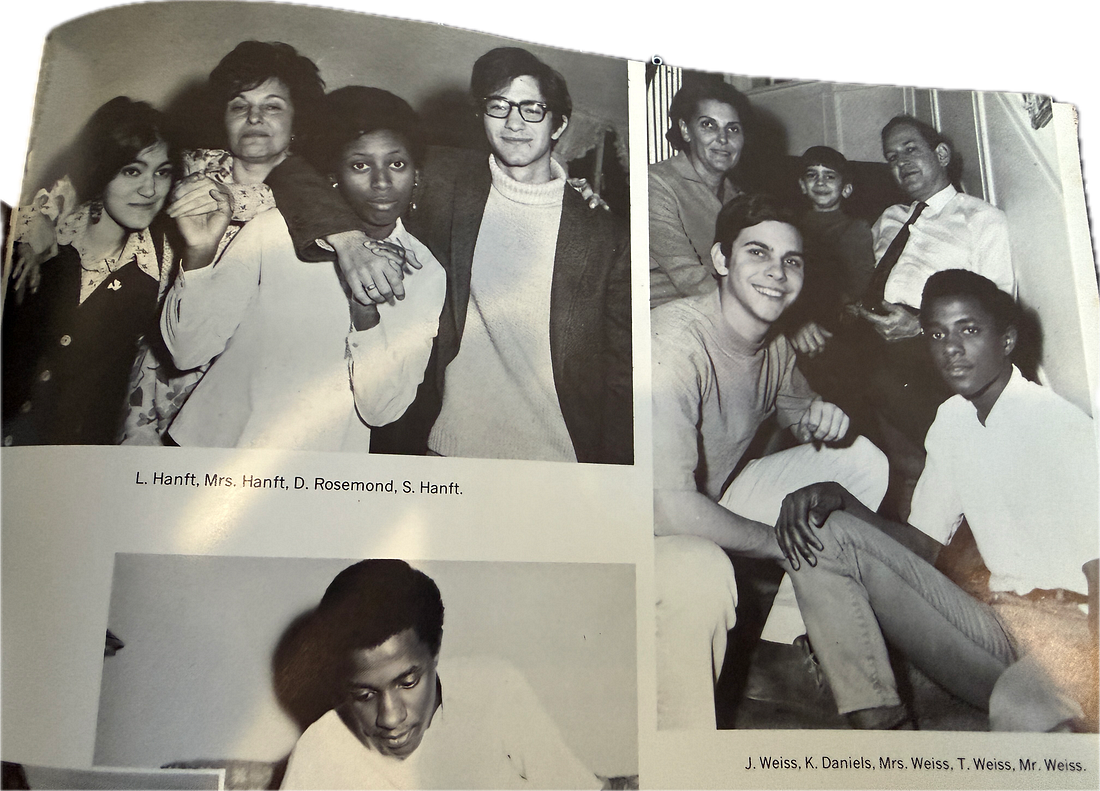
1969 Wheatley School Yearbook, at page 51, “The Student Transfer Education
Program, STEP, is now in its fifth year of operation at Wheatley. This year,
we are host to Dena Rosemond from Taylors, South Carolina, and Kenny Daniels,
From Jackson, Mississippi. Founded by the Quakers, later expanded, and now
under the direction of the National Urban League, STEP was conceived as the
means to afford Black students of the South a chance to obtain a better
education. In addition to providing the student with the opportunity to
advance academically, the program also serves to forge intimate relationships
between the students and the host community.”
I (Art) remember
from approximately 50 years ago a heated exchange between Dena Rosemond and
somebody in the Wheatley community, published in some periodical (I think),
maybe from the Board of Education. Dena bitterly complained about some
“insensitivity” (racism?) she experienced, such as people asking her, “Can I
touch your hair?” and “Will you come to our house and talk to our maid.” At
least one response criticized Dena for being “ungrateful.”
I will not comment
thereon (especially because I’m hazy on the details), but I will comment on
the photos of the Ku Klux Klan gatherings in the USA Today article. Aside
from how repugnant, and just plain stupid, their views were, didn’t anybody
ever tell them that they looked completely ridiculous in those white hooded
sheets? It’s right out of the story about the emperor’s new clothes: “Hey,
Klanners, you look like bumbling idiots.”
Annie Clarke-Gerrity (1974) Writes - “Art, Thank you for
publishing Jill Sherman’s outstanding and deeply moving article. My
understanding of race and privilege came from my home.
My father, Jack Clarke,
served as president of the Catholic Interracial Council of Long Island in the
1960s. Through that work, he met Dr. Martin Luther King Jr. and a PhD
candidate at NYU from Zambia, Ben Mtshali. When Ben’s Dutch wife searched for
apartments in New York City, she was shown several options. The moment Ben
joined her, every one of those apartments suddenly became “unavailable.” With
nowhere to live, Ben, his wife, and their infant daughter moved in with us on
Greentree Road in Mineola. Eventually, they found an apartment in New
Rochelle owned by a Puerto Rican woman.
Years later, in 1980,
when my parents put that same house on the market, neighbors warned them that
they “better not” sell to a Black family. My parents were disgusted by these
illegal threats. However, no family of color tried to move into our all-white
neighborhood. They likely understood what we were unable to see or feel - the
undercurrent of hostility made living there impossible. Greek immigrants
bought our house. That spring, they dug a pit in the backyard and roasted a
lamb. The neighbors were aghast and outraged. I was pleased to learn that the
Greek immigrants embraced suburban life in such an unconventional way.
White privilege is often
quiet and relentless. Ms. Sherman powerfully exposes the systems that
preserve advantage. One detail that she did not mention that struck me deeply
was that Robert Moses deliberately designed Long Island parkways with low
bridges to ensure that buses - carrying New York City residents, many of them
people of color - could not travel there.
In my experience at
Wheatley, we studied Nazi Germany, Europe, and Russia, but we avoided
examining injustices perpetrated in our own backyard. One exception was
Stuart Doig, who demanded critical thinking and challenged us to look beyond
comfortable narratives. His lessons still echo and are especially relevant in
this time of crisis; “Those who cannot remember the past are condemned
to repeat it.”
Paul Giarmo (1976) Writes - “Wow, A four-year-old article about racism decades ago
in a school (not Wheatley), appearing in the Wheatley alumni newsletter. How
inappropriate, yet understandable, given the political ‘sensibilities’ of
late ‘60s-early ‘70s radicals and their self-loathing, white guilt. So tired
of all their tired, old rhetoric, and their continual attempts to shut down
free speech if that speech contradicts their “accepted narrative” of events
as THEY see them. I believe that these leftists call it ‘Hate speech,’ but I
don’t care what they call it; it’s speech, pure and simple. And it’s my First
Amendment right as an American.
This censorship of what
leftist radicals call “right-wing extremism” has permeated this alumni
newsletter for years. Two personal examples come to mind.
When Harold Whack (1966)
proudly proclaimed that he helped draft dodgers resist military induction
during the Vietnam War, and I forcefully debated him on the issue.
The second incident
occurred when Wheatley’s first Valedictorian tried to convince me that
returning Vietnam War veterans were not spat upon and called “baby killers”
by radical leftists, because “The New York Times” told him so! Well, I have
two older cousins who both bravely served in Vietnam; and they will tell you
otherwise; as both received less than dignified receptions upon their return.
This kind of delusional,
revisionist ‘history,’ with no counter-balancing arguments offered, confirms
the blatant leftist orientation of this Newsletter, its editorial staff, and
many of its readers from that era. You are all entitled to your ‘opinions,’
but you should have the decency and integrity to publish the views of the
other side AS WELL.
I wonder aloud why you
would print an old story about Syosset High School in the Wheatley School
Newsletter that has NO connection to Wildcat Nation. The answer is simple.
It’s nothing more than a cynical ploy to continue the underlying promotion of
the leftist agenda, and the denigration of centrist, moderate and right wing
viewpoints. And as a mediator and arbitrator, you should be more balanced and
equitable in your decisions. You know, in the interest of fairness.
Paul (”Spirit of ‘76”)
Giarmo
Proud American
Proud Wildcat”
Art Engoron (1967) Responds - “Yes, the subject article is four-years-old. The
Declaration of Independence, the Bible, and Plato’s Republic are even older,
and they still haven’t gone out of style.
“Decades ago”? That’s the
blink of an eye in world, or even Long Island, history.
“Not Wheatley”? But a
school relatively close, with similar demographics and academic excellence.
“Shut down free speech”?
Not me, I’m a free speech absolutist……although when I was a judge, I was
ethically restrained from commenting on, or even publishing comments on,
politics and partisanship.
“The First Amendment”? -
The First Amendment only restricts governmental restraints on speech. Trust
me, The Wheatley School Alumni Association Newsletter is not published by any
government. But in any event, I have never restricted any speech (except as
indicated immediately above). And I’m publishing your entire screed.
Yes, you debated Harold
Whack (1966) in these pages. How was that censorship?
Yes, Steve Nelson,
Wheatley’s first Valedictorian, challenged the claim that protestors spat on
US veterans returning from the War in Vietnam and called them “baby killers.”
You say that your two cousins “received less than dignified receptions upon
their return.” If I understand you correctly, they did not claim that
protesters spat on them and/or called them baby killers.
“Editorial Staff”? I am
the editor, and there is no “staff.” Keith Aufhauser (1963) takes care of the
website (WWW.WHEATLEYALUMNI.ORG),
and occasionally I seek his wise counsel.
“My decisions"? I
don’t “decide” what to print, I print everything (except as noted).
Graduates
1964 - John Corwin -
Piano Recital in Two Parts
John Corwin (1964) Piano Recital, Part One
John Corwin (1964) Piano Recital, Part Two
1966 + 1967 - Alison Kent and Art
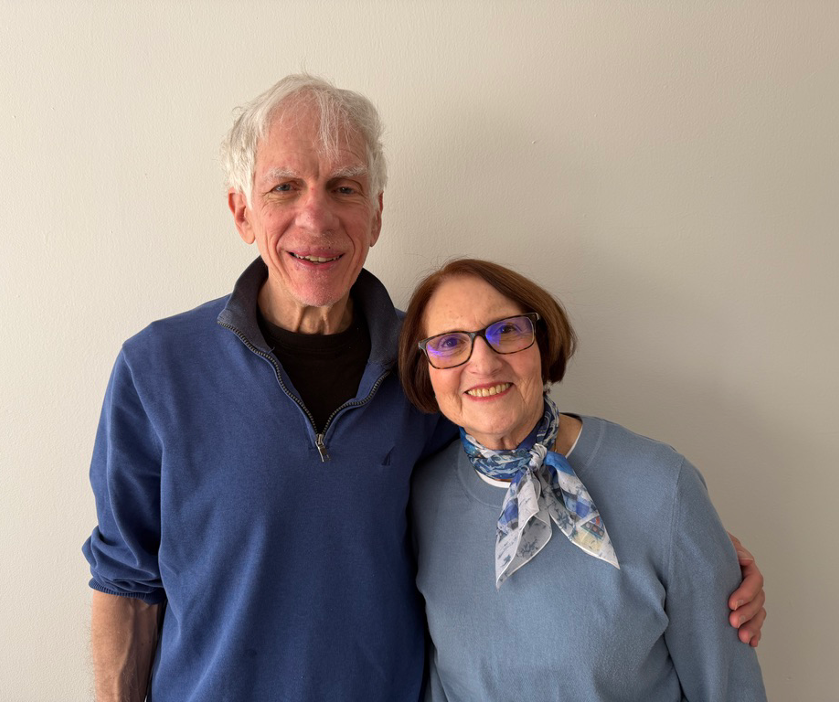
Engoron - Great Neck, NY - January 30, 2026
1967 - Robert Douglas
(“Doug”) Brautigam - Deceased
ROBERT DOUGLAS BRAUTIGAM
(“Doug”) passed away peacefully
on January 9, 2026, after a short illness, surrounded by family and friends.
He lived in Monroe, NJ and is survived by his wife, Joy; daughter, Lauren
Clark; grandson, Fletcher Clark; and granddaughter, Alice Clark; sister, Betsy
Brautigam Carter (1965) and brother, Steven
Brautigam (1971), in addition to numerous nieces and nephews.
He was pre-deceased by his mother, Elizabeth; his father, Robert and his
brother, Kendall Brautigam (1975).
1967 - Art Engoron, Ben
Ross, Dan Silver Mitch Stephens - New York Mets 1964 Banner Day Winners
L-R - A Macy’s
(or maybe a Mets) Executive, Art Engoron, Dan Silver (99.99% obscured, one of
his hands is faintly visible above and between the “R” and the “E” of the top
line); Mitch Stephens (profile and leg visible); and the second place
finisher (his banner reads “Pray.” On the table is a sample of the television
sets that Art, Dan and Mitch won and shared with Ben.
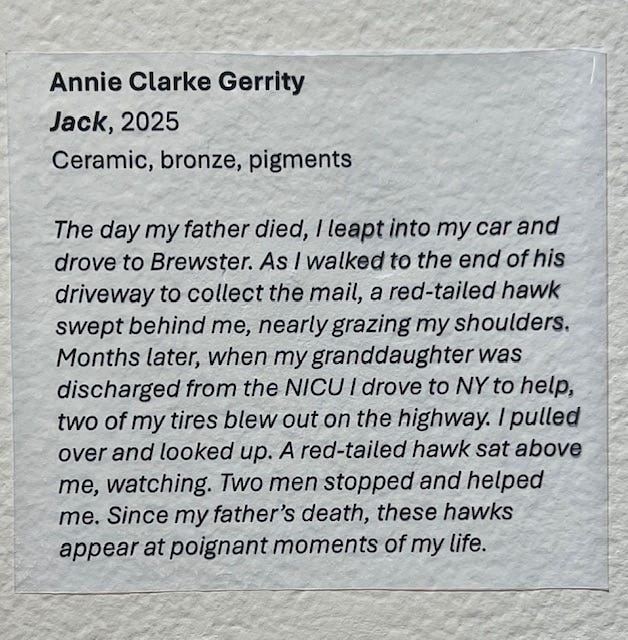
1974 - Annie Clarke-Gerrity - “Art, Below is a sculpture I made that was accepted into
a show and is currently on display at the Cape Cod Museum of Art. Since I
recently submitted an essay (above) in which my dad is mentioned, I thought
it timely to send this, too.
Fan Mail
1964 (Natalie Cobb Wentworth) - ❤️
1964 (John Corwin) - “I continue to enjoy reading the Newsletters (I even
saw my photograph in one recently!).”
1964 (Richard Ilsley) - ❤️
1965 (Sharon Neely Halm) - ❤️
1967 (Jill Simon Forte) - “Another interesting Newsletter; I always love seeing
them in my email inbox 🙂.”
1967 (Barbara Smith Stanisic) - ❤️
1974 (Melanie Artim) - ❤️
1974 (Annie Clarke-Gerrity) - “Thank you for your dedication to the Newsletter and
beyond.”
1974 (Jessica Hill Saperstone) - ❤️
1976 (Leigh Tessler) - ❤️
1980 (Todd Cooper) - ❤️
2015 (Alexis Schwartz Courtney) - ❤️
The Official Notices
All underlined text is a
link-to-a-link or a link-to-an-email-address. Clicking anywhere on underlined
text, and then clicking on the text that pops up will get you to your on-line
destination or will address an email.
The Usual Words of Wisdom
Thanks to our fabulous
Webmaster, Keith Aufhauser (Class of 1963), you can regale
yourself with the first 252 Wheatley School Alumni Association Newsletters
(and much other Wheatley data and arcana) at our website:
The Wheatley School Alumni Association Website
Also thanks to Keith is
our search engine, prominently displayed on our home page: type in a word or
phrase and, wow!, you’ll find every place it exists in all previous
Newsletters and other on-site material.
I edit all submissions,
even material in quotes, for clarity and concision, without any indication
thereof. I cannot and do not vouch for the accuracy of what people tell me,
as TWSAA does not have a New Yorker style fact-checking
department.
We welcome any and all
text and photos relevant to The Wheatley School, 11 Bacon Road, Old Westbury,
NY 11568, and the people who administered, taught, worked, performed, and/or
studied there. Art Engoron, Class of 1967
Closing
That’s it for The Wheatley School
Alumni Association Newsletter # 254. Please send me your autobiography before
someone else sends me your obituary.
Art
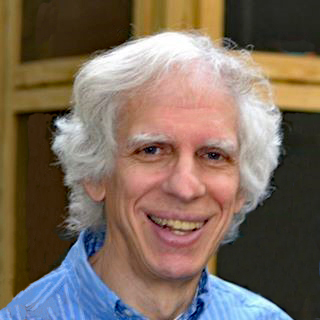 Arthur Fredericks Engoron, Class of 1967
thewheatleyschool@substack.com
WWW.WHEATLEYALUMNI.ORG
Newsletter Author - Art Engoron
Webmaster - Keith Aufhauser