Update: The Best
Invitation of 2026 Just Got Better
FABULOUS MUSICAL ENTERTAINMENT
ANNOUNCED FOR THE UPCOMING MARCH 21 & 22 ALL-CLASSES-INVITED WHEATLEY
WEEKEND EVENT IN PALM SPRINGS, CALIFORNIA
Richard “Rich” Weissman (1972) Writes – “I’m delighted to announce that we will have
spectacular entertainment at the March 21, 2026 evening champagne/wine
dinner. You are all welcome to attend the catered dinner on March 21 at 5:00
pm and the catered poolside lunch on March 22 at 11:00 am, both at our home
in Palm Springs. Spouses, partners, companions, family, and friends are all
invited, and feel free to include those with whom you are travelling or
visiting. Everyone is our guest (my husband, J.D. Horn, and I are picking up
all the costs for both of these events*).
We are now at almost 60
people who have replied “yes” or “maybe” to the weekend events (most are
“yes”). Please pass this onto all those you know from Wheatley. Feel free to
use this as an email blast to your class lists.
If you haven’t RSVP’d (or
if you were a “maybe” and are now a “yes”), email me at rweissman@hotmail.com.
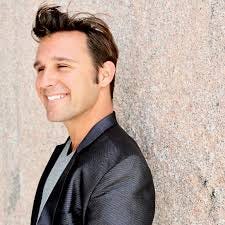
At the dinner, the renowned singer
Nicolas King will perform with his accompanist on the piano. Earlier this month, my husband and I attended Nicolas’
sensational one-man show in Puerto Vallarta, Mexico. His voice is
breathtaking, and we immediately knew that we had to have him perform at the
Wheatley event. We were able to make it work. He comes to our Palm Springs
event from NYC.
Nicolas’ iconic voice has
been on Broadway since he was four years old, with a Broadway career
including Disney’s “Beauty and The Beast,” “A Thousand Clowns,” Carol
Burnett’s “Hollywood Arms,” Sondheim’s “Follies,” “The Wizard of Oz,” and a
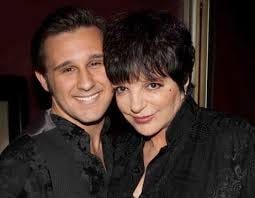
multitude of other shows and performances. For ten years (2002 – 2012),
Nicolas toured with his close friend and mentor Liza Minnelli, performing as
her opening act. Nicolas was featured on “The Marvelous Mrs. Maisel,” and has
appeared on “The View,” “Today,” and “The Tonight Show.” He has also
performed at Carnegie Hall, Lincoln Center, Ronnie Scott’s Jazz Cub (London),
Birdland Jazz Club (NYC), 54 Below (NYC), and other venues worldwide.
Nicolas’ accolades
include many coveted awards, including twice winner of the Talent America
Award, Broadway World Award, AMG Heritage Award for Artist of the Year, Mabel
Mercer Foundation Julie Wilson Award, AMG Heritage Award for Artist of the
Year, Bistro Award for Outstanding Performer, and others including
consideration for the Grammy Award for his latest album. He has numerous
albums available on CD’s and major streaming venues. Although young, he
brings the classic Great American Songbook and jazz genres to audiences
worldwide with a voice that is both quintessential for these genres yet
original.
Nicolas today …
Nicolas with
Liza Minnelli performing together …
* You provide
your own air travel, ground travel, and accommodations. Email me if you need
information on places to stay or have any questions.
Richard (Rich) Weissman
Class of 1972 (but
graduated in 1971 and not in the 1972 yearbook)
Attended North Side
School grades 1-6, and then Junior and Senior High at Wheatley
Email: rweissman@hotmail.com
Cell: 503.250.4545
Website: www.richweissman.com
Residences
Palm Springs, CA (Andreas
Hills)
San Francisco, CA (Nob
Hill)
Black Butte Ranch, OR
(Cascade Mountains, Central Oregon)”
A 2022 USA Today Article About Racism on Long Island -
Modified Somewhat from the Original
“Pam’s experience at my 1960s white school is the history we
need to teach. Not ignore.”
“Where
were the adults who should have made sure that we learned about the centuries
of official and unofficial policies that shaped North and South, Pam’s family
and mine?”
Jill Lawrence
More than 50 years ago in
Mississippi, a Black teenager named Pamela Gipson decided to spend her junior
and senior years at a blindingly white high school on Long Island in New
York. She was 15 years old, and she missed home so much that sometimes, she says,
“I would walk down to the street and through the woods to see a major
highway, just to see Black people driving.”
What on earth led her to
leave everything and everyone she knew at that age?
The simple answer is that
her parents wanted her to have an excellent education and a limitless future.
She wanted all that, too. Syosset High was an exceptional school with far
more resources than her segregated high school in Jackson. “The whole idea was
to broaden my horizons, to better myself, to have a better opportunity,” she
says.
Black ‘Exchange’ Students
There were good high
schools closer to home, and a few Black students were starting to attend
white schools in Jackson. But “back then, there were all kinds of dangers for
integration in schools,” Pam says. Rather than subject her and themselves to
those fears, her parents agreed to the safer alternative: Going North. “My
daddy told me years later that my mother cried every day,” Pam says.
I was one of her
classmates, and I just learned all of that this year.
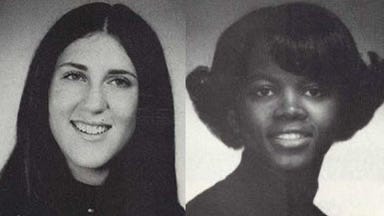
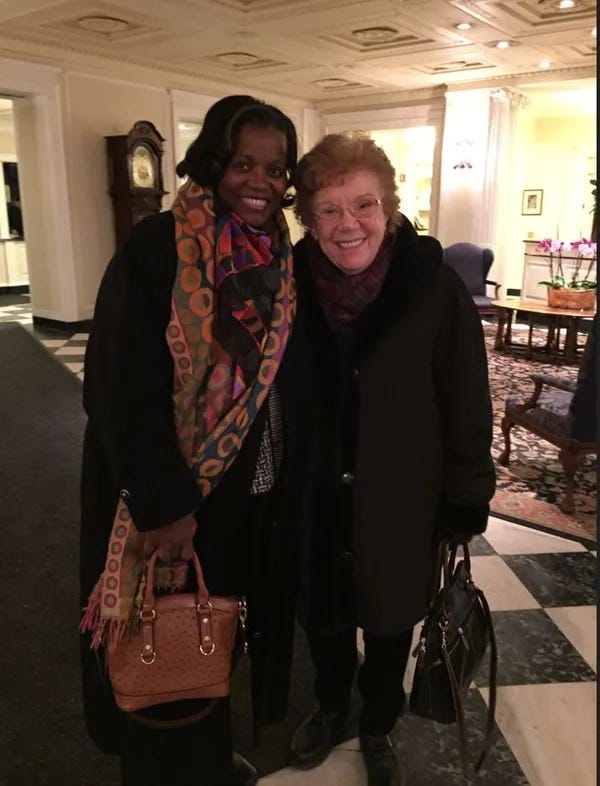
L-R - Jill
Lawrence, Pamela Gipson
When the program was
explained to her, Pam says, “the idea was it should have been an exchange.”
Then, she added what we both knew: “No one ever came from Syosset back to the
Deep South.”
Then, as now, few
Northerners knew much about the South and the Black experience or felt any
need or obligation to learn. Then, as now, the burden was on Pam, and Black
people writ large, to figure out how to adapt, to accommodate, and even
sometimes to survive.
Syosset was like most suburbs on Long Island and across the
United States: almost entirely white. Pam wrote on her 1970 yearbook page
that there were four Black students at Syosset High (one of them another
“exchange” student from the South). There was also a Black art teacher during
our time there, along with a couple of South American exchange students and a
handful of Asian American classmates. One of them was Elaine Chao, who went on to marry Mitch
McConnell, now the Senate Republican leader, and to hold Cabinet posts in two presidential
administrations.
These dashes of diversity
were nearly imperceptible in a school of about 2,200 students. I don’t recall
anyone mentioning the absurdity of Black “exchange” students from our own
country. I don’t remember any teacher or student commenting on the overwhelming
whiteness of our town and schools.
And I didn’t think to
ask, nor did Pam.
I was worried about how
my hair looked, how to end the Vietnam War, how to pass calculus, why girls
had to wear skirts or dresses to school, even when it snowed. I was a
teenager.
And so was Pam, even as
she coped with problems unimaginable to me. She had been an excellent student
in Jackson, but in Syosset, some teachers made her doubt herself. She also
encountered “colorism,” or prejudice triggered by her dark skin. “I questioned
who I was,” she says.
‘The history we forget to remember’
When America started
arguing last year about how and even whether to teach kids about our nation’s
ugly racial history and its seemingly infinite half-life, I started wondering
what had happened to Pam and what she thought about that argument. When I finally
found her, we both marveled at the vacuum in our education. Where were the
adults who should have made sure we learned about the centuries of official
and unofficial policies that shaped North and South, Pam’s family and mine?
Here are a few bits of
history that seem like news flashes, even today:
New York was a slave
state, starting with 11 Black Africans “purchased” by the Dutch
West India Company in 1626. Slavery was especially popular on Long Island
because the area needed labor. Most slave owners on Long Island enslaved just
a handful of people. They worked on farms, in homes and sometimes as tailors,
whalers or other skilled jobs.
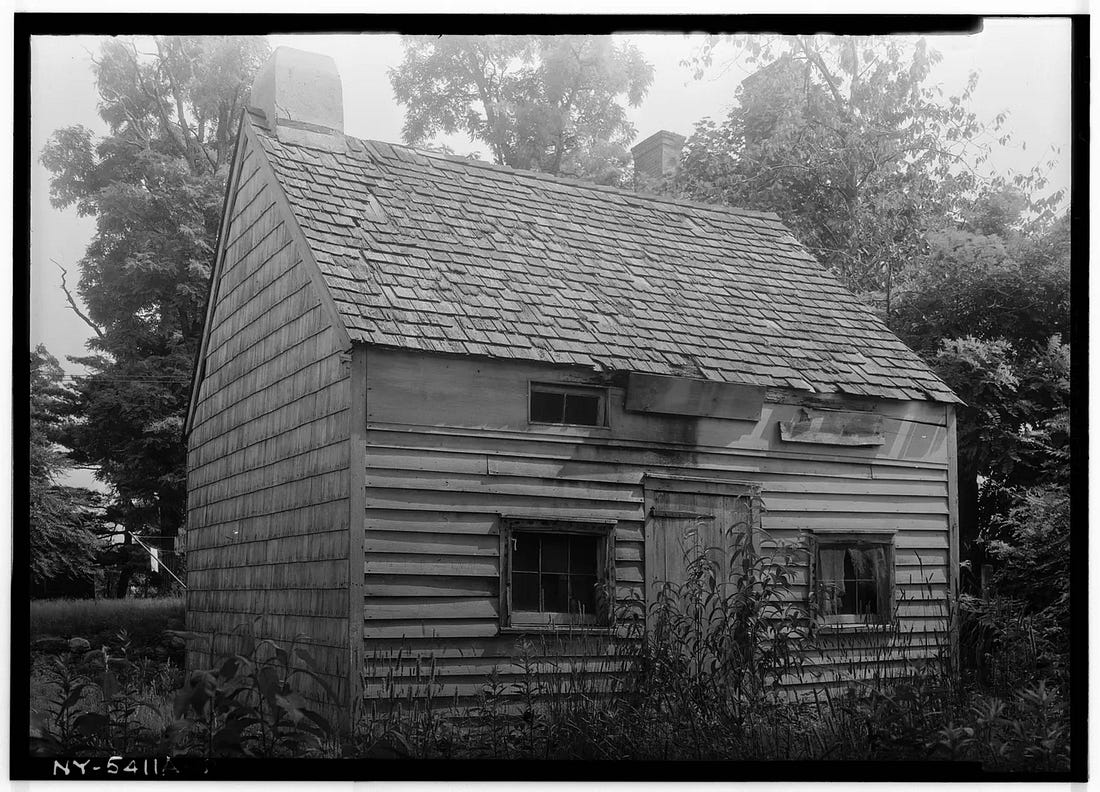
Caleb Smith
Slave House in Commack, NY.
Long Island’s two
counties, known then as Suffolk and Queens (most of today’s Nassau County)
had the highest enslaved population in the North during most of the Colonial
era, according to historian Christopher Claude Verga, author of “Civil Rights on Long Island.” Or, as WSHU
public radio in Westport, Connecticut, put it in 2020, “Slavery was not just
a ‘southern’ thing. It played a central role on Long Island.” The station
called it “the history that we forget to remember.”
Under pressure from
abolitionist Quakers, New York phased out slavery by July 4, 1827. But as
in the South after the Civil War, many freed slaves worked for their former
owners as tenant farmers, and New York cut them out of the political process
with a constitutional amendment requiring property ownership to vote.
This “racial caste
system,” as Verga calls it, was still in place a century later when Long
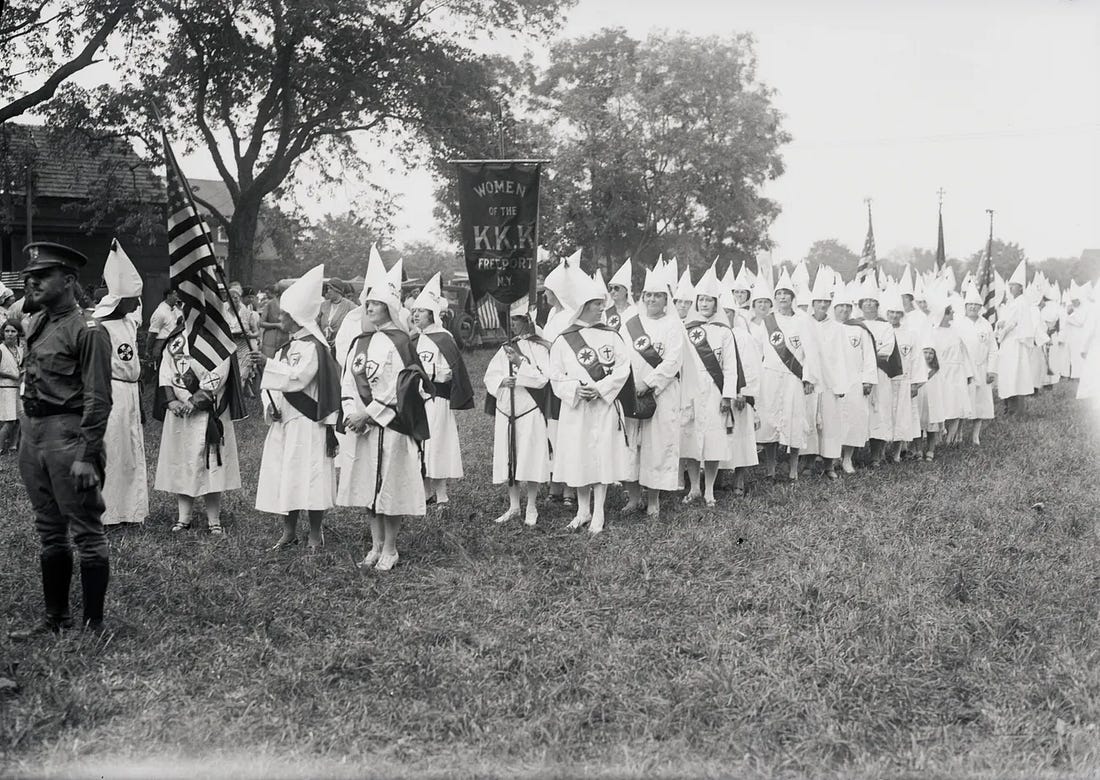
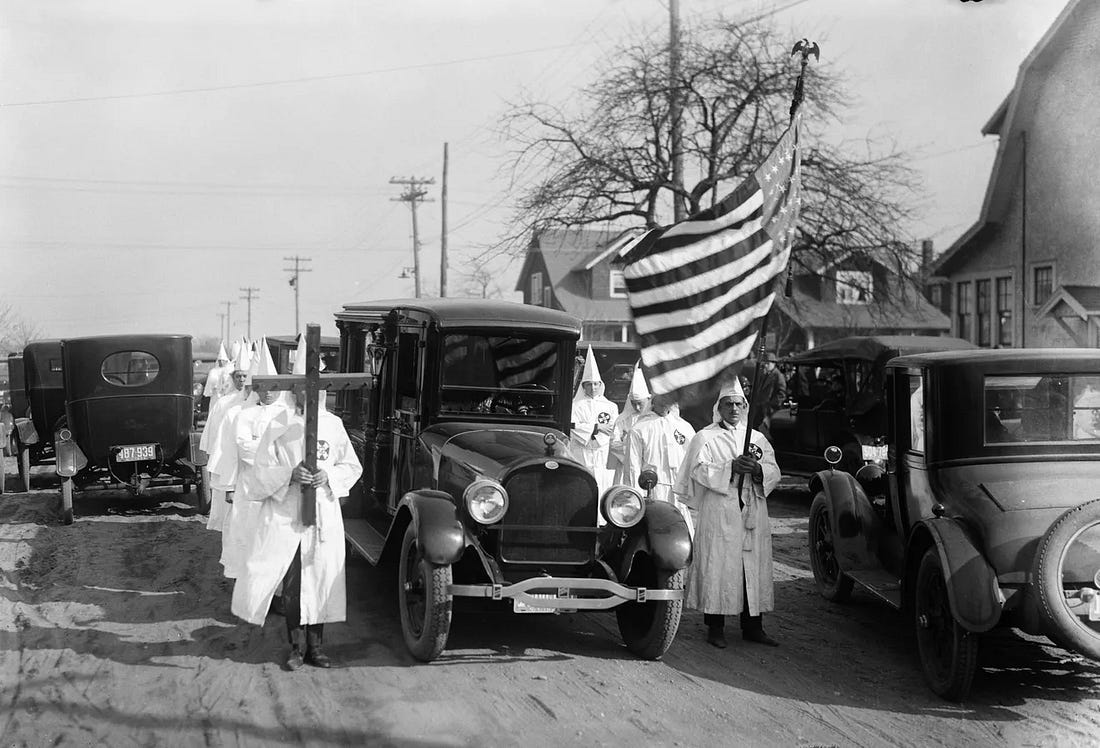
Island became a hotbed of Ku Klux Klan activity. The historical record
includes jarring documentation of the Klan as a highly visible part of life
on Long Island. KKK members in robes and hoods, their faces fully exposed,
attended funerals, held rallies, sponsored fire department events and marched
in community parades.
Ku Klux Klans
women turn out for a parade in Lynbrook, NY on July 20, 1930
Ku Klux Klansmen
in Freeport, NY march beside a fellow KKK member’s hearse.
This, too, like slavery,
was not just “a ‘southern’ thing.”
During the 1920s, as it
grew more Catholic, Jewish and Black, Long Island had the largest Klan
membership in New York, and the Klan had “a strong presence on most of Long
Island” until the late 1970s, according to Verga. Klan members “infiltrated
local real estate markets and law enforcement and gained political
influence.” Real estate brokers, mortgage bankers and insurance companies
were their “financial backbone,” Verga wrote.
This unholy
segregationist alliance locked Black people out of the post-World War II
housing boom and white neighborhoods. In Levittown, the archetypal mass-produced suburb that sprang
up after the war and spread quickly across the country, developer William
Levitt rented and sold affordable homes to white families only. They agreed
in their leases and deeds “not to permit the premises to be used or occupied by any person other than members of the Caucasian race,”
except for domestic servants.
It sounds like an outrage
now, but as historian Joshua Ruff wrote in American History magazine, it was
national policy then: The Federal Housing Administration supported “nationwide racial covenants and ‘redlining’
– or devaluing – racially mixed communities.”
Covenants barring Black
or nonwhite residents were common all over the country, including in and
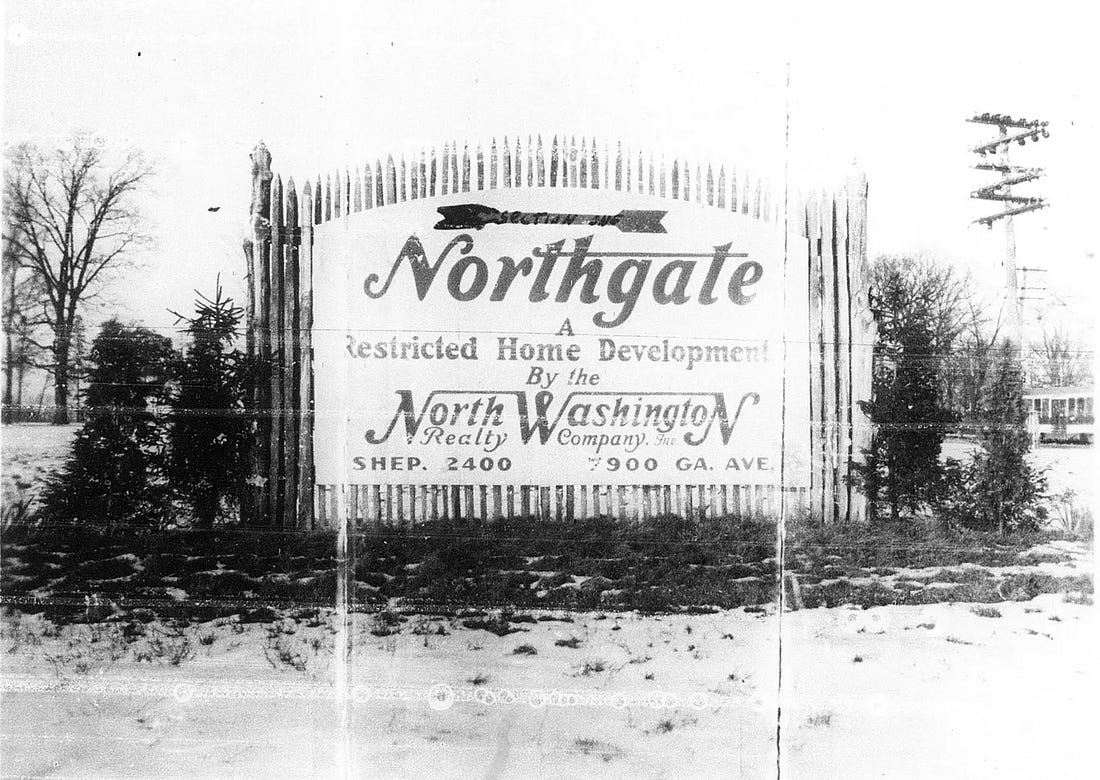
around the Washington, D.C., neighborhood where I live today. In 1930, one
nearby development promoted itself on a billboard as “restricted” (to whites only). Early in the
20th century, the Chevy Chase Land Co. required that no property “shall ever
be sold, leased to or occupied by any person of negro blood.” Except, as in Levittown, your
domestic servants could live in your house.
Billboard for a
whites-only “restricted” home development in 1930 in the Washington, D.C.,
area.
Syosset did not have
explicit covenants. It just had an implicit rule: You do not sell to Black
families. This line was not crossed until 1964, when a white family arranged
a sale to a Black family. Local newspapers chronicled what happened next.
Essentially, nothing.
“For the first time in
Syosset’s history, a Negro has bought a house here. And the skies have not
fallen,” the Syosset Tribune wrote in a June 11, 1964, editorial headlined
“First Negro Here.” Or, as Newsday put it a couple of months later, “A Negro
Family Finds Serenity in Syosset.”
Lost opportunities that still reverberate
It is impossible to
overstate the damage done by governments, banks, developers, realtors and
countless other players in creating segregated residential suburbs all across
America. Though housing discrimination has been illegal for decades, its
legacy is very much present.
In 1997, a Queens College
sociologist found that Nassau County was the most segregated suburban county in America.
That’s where Syosset is located; in 2021, only 0.8% of its population was Black or African American.
“It was the way of the
world,” says Elaine Gross, who founded the Syosset-based group Erase Racism and led it for 21 years before
becoming president emeritus in September. “The official policy was that you
do not mix the races in housing. And one way to ensure that is to have a
policy that says you can’t get a loan if you’re an African American. You will
not be able to get a government-backed mortgage. And you can’t leave the
segregated areas and go to another area.”
These policies have
reverberated through the generations in lost opportunities for Black families to own
homes and build wealth.
My family of commuter
dad, stay-at-home mom and three kids fit comfortably into these exclusionary
suburbs made just for people like us. I was white, privileged and oblivious.
I was cramming two years of high school into one so I could leave town. I had
proposed and won approval for an independent study English project on “Black
male sexuality in literature.” Me, a white teen in an almost entirely white
town. In my defense, reading Eldridge Cleaver truly was educational.
But it never occurred to
me to ask questions about the near total absence of students of color, and
unpleasant close-to-home truths about race did not come up in class in the
1960s. I don’t recall learning about Long Island’s enslaved people, the KKK,
the racial covenants, the iron-fisted segregation, or the role of local and
federal governments in perpetuating a blatantly discriminatory housing
system.
As recently as 2008, in
his book “New York and Slavery: Time To Teach The
Truth,” Alan J. Singer – a professor and high school social studies teacher –
documented the racial history of the North and its absence from New York
classrooms despite the state’s central role. Reviewer William Loren Katz said
the subject “has yet to find its niche in our school social
studies curricula, in teacher college courses, and on Regents examinations.”
A teen ambassador in her own country
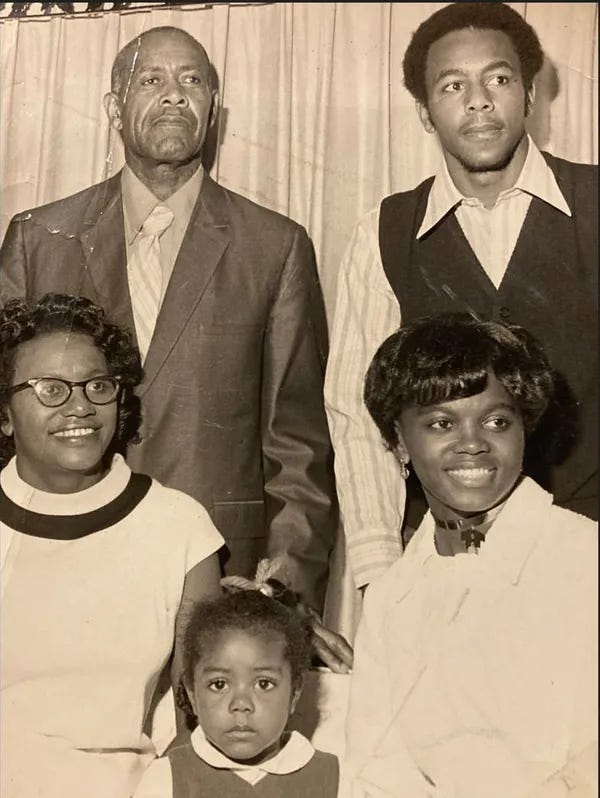
The Gipson
Family in 1972, clockwise from bottom left: Thelma Gipson (Pam’s mother);
Lonnie Gipson (her father); Jeffrey Gipson (her brother, age 17); Pam Gipson
(age 19); and her godsister (age 2).
Pam moved to Syosset in
1968, the same year Congress passed the Fair Housing Act and just four years after
the first Black family had bought a house there. She was surprised by what
she found. Her high school counselor in Jackson and a local Urban League
official had said she’d be living with a family. But, she told me, “I can’t
tell you that they said you’re going to be in an all-white environment. I
don’t remember that coming up.”
Much of what she
encountered in Syosset, however, was sadly predictable. “Many people thought
I came from a large family, and that I didn’t know my father, that we had
dirt floors,” she says. “I said ‘No, I have a mother and a father. They’re
married. I live in a house, and my parents own the house.’ ” And for the
record, she has one sibling, a brother.
Her father, with a
sixth-grade education, drove an 18-wheeler brick truck and rose to brickyard
supervisor. Her mother, who finished high school, was a beautician and a
beauty salon owner. “They were excellent providers. They were active in their
church in leadership roles. Had they not been deprived of opportunities to
advance themselves, they would have been – in my opinion – very outstanding
professional people,” Pam says, laughing as she adds “in my opinion.” We both
knew it was a fact.
Pam’s host family, with
three teenage sons, threw her a party and did all they could to make her
comfortable. “People thought I was a maid. But I was actually a member of
that family,” Pam says.
Pamela Banks and
her Syosset host mother, the late Jane Perlstein, in NYC in 2015.
John Perlstein, one of
her host brothers, says his mother, Jane, was “delighted to have a daughter
in the house” after raising three sons and was fiercely protective of Pam.
Both his parents “made sure that Pam knew they had her back” if she needed
them, he says.
The Perlsteins lived in
Muttontown, a tony area with large homes and lots. My parents, both college
graduates, lived there as well. They had moved from a small 1955 split-level
to a larger Muttontown ranch house in 1968. So Pam and I were neighbors, but our
paths did not cross in a meaningful way until this year.
‘If you open up the door, I’ll show you what
I can do’
My trajectory was not
unusual for that time and town. I went to the University of Michigan,
protested the Vietnam War and wrote for a feminist newspaper in Ann Arbor called
“her-self.” I became exactly what anyone who knew me could have guessed in
junior high school: a politics reporter and, in 2009, after 32 years of
reporting, a columnist.
Pam’s uncharted, far
braver journey continued beyond high school. She probably would have attended
Tougaloo College near Jackson if she hadn’t relocated to Syosset. Instead she
went to Ohio’s Antioch College, which she recalls now as an “almost radical” liberal
arts campus popular with white, well-to-do hippies in T-shirts and torn
jeans.
That was not Pam. She
calls her college self “a Southern belle” who wore dresses and skirts and did
not smoke, drink, protest, go to jail or get arrested. She was not angry. She
was, she says, focused on improving and proving herself: “It’s like James Brown
would say – ‘I don’t want nobody to give me nothing. Open up the door, I’ll
get it myself.’ I had been so used to doors not being open. So my approach
was, if you open up the door I’ll show you what I can do, how I can succeed.”
Antioch’s real-world work
requirements allowed Pam to connect with civil rights and War on Poverty
activities in her home state. She worked with children in the Mississippi
Delta and at the Jackson office of the Lawyers’ Committee for Civil Rights
Under Law. The assignments gave her a mission: “I said, ‘I must go back home.
I need to be home trying to help.’ ”
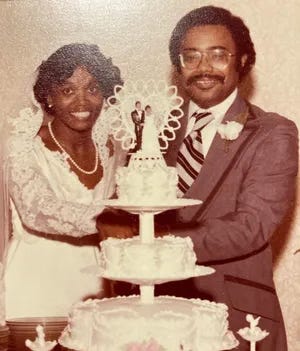
The wedding of
Pamela Gipson and Fred L. Banks, Jr., on January 28, 1978, at Hope Spring
Missionary Baptist Church in Jackson, Mississippi.
On her page in the 1970
Syosset High School yearbook, Pam said she was confused in Syosset about who
she should be. “I am picking up the pieces to my puzzle slowly,” she wrote.
“It is my goal to be me, Pam Gipson, young woman, black soul-sister. I shall succeed.”
And she did.
After graduating from
Antioch, Pamela Gipson earned a masters degree in social work and a Ph.D. in
psychology. Dr. Pamela Gipson Banks is now a licensed clinical psychologist,
a professor and chair of the Department of Psychology at Jackson State
University. She has a daughter, two stepchildren and two grandchildren. Her
husband, Fred L. Banks, a former civil rights lawyer,
state legislator, trial judge, and Mississippi Supreme Court justice, is a
senior partner at Phelps, a large law firm.
Reckonings with racism and treason
Wild pendulum swings on
race have been a constant in America’s past, for centuries and in our
lifetimes. Just in the last couple of decades we have seen police brutality
against Black people and multiracial Black Lives Matter protests and Barack
Obama’s historic election.
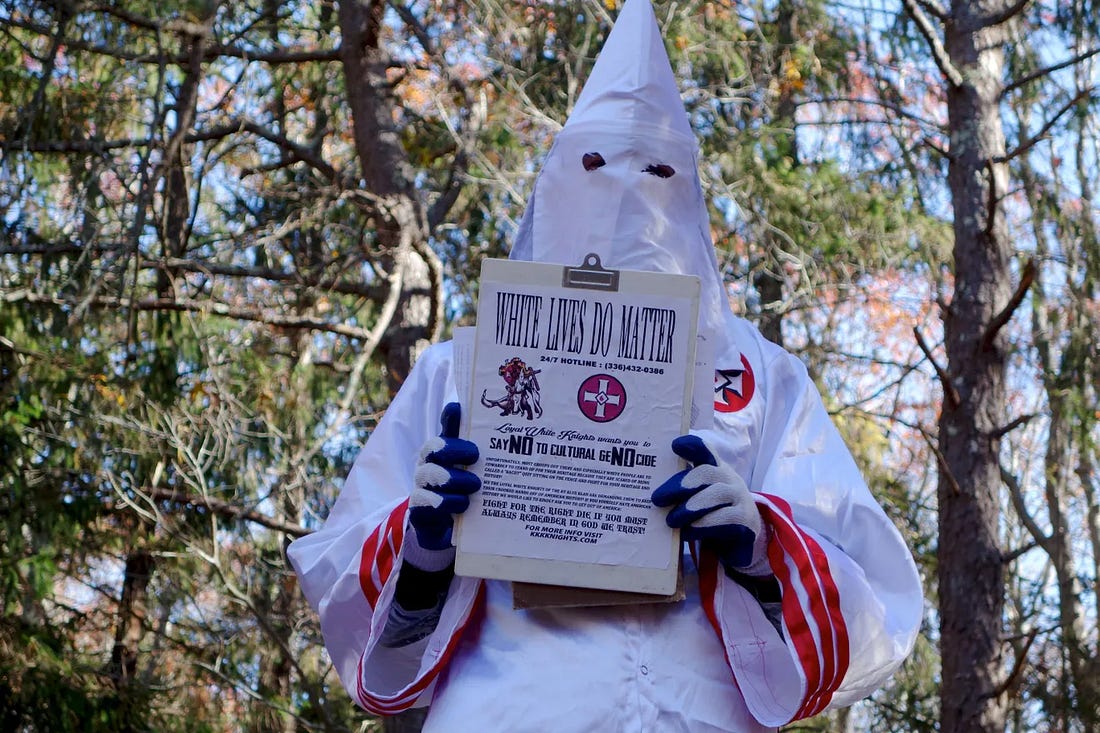
A Ku Klux Klan
member in Hampton Bays, Long Island, New York on November 22, 2016
So much of this is
occurring in a historical vacuum for people of all ages. It was 2003 when
Congress passed a bill to establish a National Museum of African American History &
Culture and 2016 when it opened – nearly four centuries after the
first enslaved people set foot in the New World.
The 1968 Fair Housing Act
was supposed to end discrimination in housing. But on Long Island, a Newsday investigation 50 years later showed
that it had not.
Late last year, New York
Gov. Kathy Hochul signed nine new fair housing laws designed to end
statewide the bias exposed by undercover Newsday investigators who secretly
recorded real estate agents and prospective buyers.
Education has also been
resistant to transcending the past. Dr. James F. Redmond, a Syosset schools
superintendent hired in 1963 from New Orleans, is a case study. In a March
1963 profile, the Syosset Tribune said the Louisiana Legislature had fired
Redmond seven times for integrating schools as ordered by the Supreme Court – and a federal
court reinstated him each time.
‘Economics of inequality’
Whatever the exact number
of “firings,” Redmond stood up to the pressure and his
presence in Syosset was a harbinger of later progress. Syosset High School
has worked for years with groups like the Holocaust Memorial and Tolerance
Center and Erase Racism, has relationships with others through a Diversity
and Inclusivity Task Force, and has long offered electives on the “economics of inequality,” “government &
society in the 60s and 70s,” and “contemporary issues in Asia and America”
(the town is now 29% Asian American).
After George Floyd was killed by police in 2020, Syosset school
superintendent Tom Rogers said he had heard from former students wishing that
“their own experience learning about racism at Syosset had been
more thorough.” Since then, the high school has added a full-year Long Island
Studies elective that dives into postwar history, including residential
segregation, and also touches on slavery and the KKK presence on Long Island.
Is Syosset typical?
Gross, of Erase Racism, suggests it is not. “We work with high school
students and they tell us they do not get that history,” she told me before
she retired.
In sessions with
educators, she says, some said they learned new things at an
Erase Racism presentation summarizing 400 years in 20 minutes. “There is a
kind of ignorance about everything,” she says. “We still meet people in our
workshops that don’t even know the story of Levittown and the federal
government’s role in segregation.”
A past that refuses to recede
The Floyd murder
initially had an energizing effect, not just in Syosset but on educators
nationwide. New York state’s Board of Regents captured the mood in April 2021
with a new diversity, equity and inclusion framework
designed to make students feel like they belong and have a voice. The entire
nation has reached a “point of reckoning,” the authors wrote. “Finally, we
appear ready to address our long history of racism and bigotry, and the
corrosive impact they have had on every facet of American life.”
Gross says the New York
curriculum plan spurred some districts to explore how to bring more racial
history and diverse books into their curriculum. “We thought that was really
going to be a bonanza of all things good related to public school education.
And then the school board elections came,” she says, with attacks on CRT,
threats of book bans and fears stoked by outside groups.
At least one group
canceled an Erase Racism workshop “because of this whole topic,” Gross says,
and curriculum discussions on race during the 2021-22 school year largely
moved behind the scenes – if they continued at all.
The risks of not teaching about racism
You only need look at Pam
Gipson’s life to see the risks of not talking and teaching about the facts of
systemic racism.
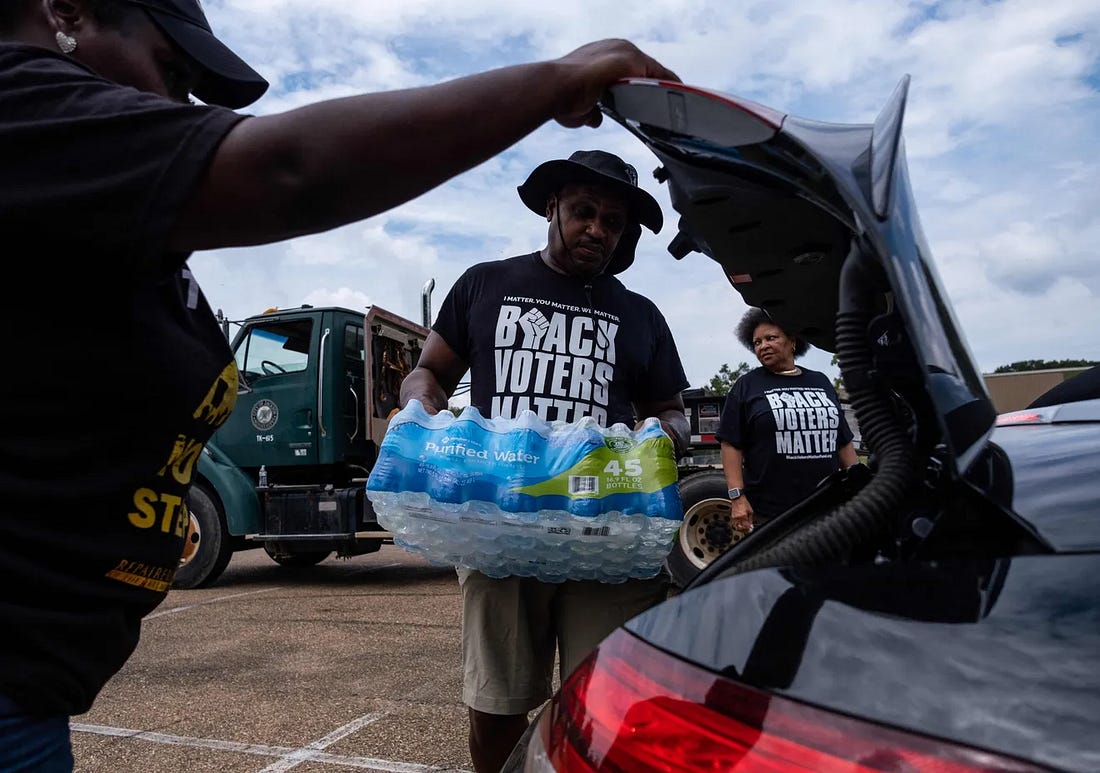
Residents
distribute cases of water in Jackson, Mississippi on September 3, 2023.
Infrastructure: Jackson’s water crisis isn’t just a moment. It’s a
systemic catastrophe.
Pamela Gipson Banks lives
in Jackson, an 80% Black city where the water system collapsed in August.
That was the culmination of chronic underinvestment in Black communities.
Years ago, Pam left home
for educational opportunities that weren’t available to her then in Jackson.
That was the result of chronic underinvestment in Black schools generally, leading to Black
underrepresentation in higher education, leading in turn to affirmative
action and the Supreme Court arguments Monday on whether Harvard and the
University of North Carolina may continue to consider race as a factor in admissions.
We can push for students
to learn about all this. Or we can perpetuate generations more of ignorance
about how America failed Black families like the Gipsons in ways that are
rooted in yesterday yet persist today.
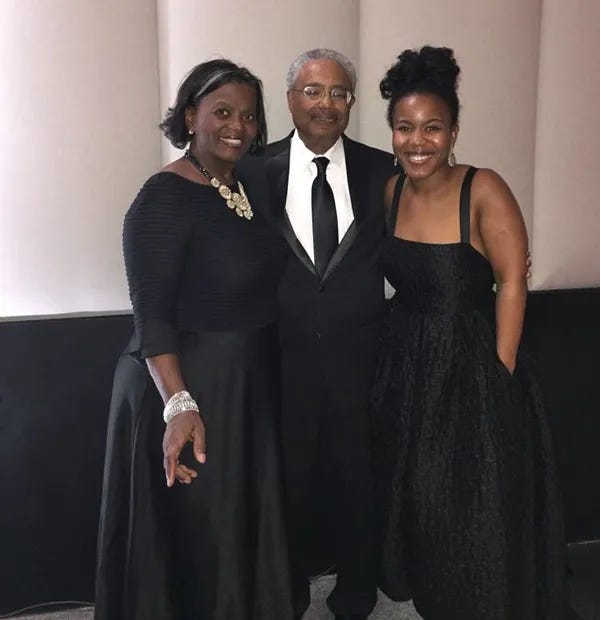
L-R - Licensed
Clinical Psychologist Pamela G. Banks, a professor at Jackson State
University and chair of its Psychology Department; former Mississippi Supreme
Court Justice Fred L. Banks, Jr.; and their daughter, Gabrielle G. Banks, a
pediatric licensed clinical psychologist, at a wedding in Washington, D.C.,
in 2017.
More than 50 years after
she faced racial stereotyping at a northern high school, Pamela Gipson Banks
says it’s disheartening that “age-old prejudice” is still with us. “I just
feel so discouraged that our advancements have been so limited,” she says. Her
own family has worked toward justice, opportunity and equality for
generations, and it’s not over yet. “We have two grandchildren. We’re
thinking that they might have to make great sacrifices, too. But if they will
help carry the torch, that would be great.”
The triumphant and the
terrible are now part of America’s story. But will it be taught? How much,
and how accurately? The answer is increasingly murky.
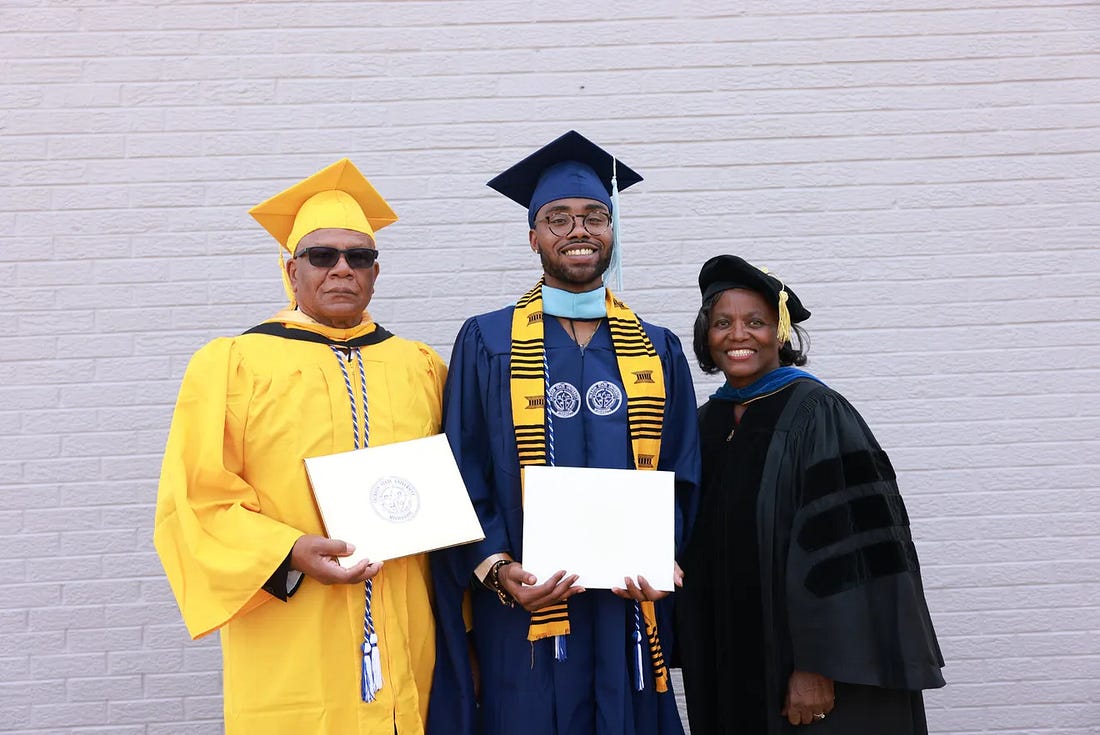
Jackson State
University Professor Pamela Banks at the spring, 2022 JSU Commencement
Ceremony in Jackson, Mississippi with her second cousin Symeon Butler (who
received a Master’s Degree) and her first cousin, Donnie Banyard (left) who
received a Golden Diploma marking the 50th Anniversary of his graduation.
Americans with Black skin
have been disadvantaged from the moment formerly enslaved people did not get
the 40 acres and a mule that they were promised, to the moment white
attackers deliberately destroyed Black Wall Street in Tulsa, Oklahoma, more
than 100 years ago, to right now.
Just look at the racial wealth gap (on average, Black
households have 14.5% the assets of white households) and the Black homeownership rate (nearly 30
percentage points lower than whites). Look at the Black incarceration rate, the Black poverty rate, the Black maternal mortality rate – all much
higher.
We are nowhere close to
figuring out how to repair centuries of oppression, generations of potential
unfulfilled. In fact, our collective will to do so may be evaporating. But
our current realities and the history that forged them must be taught. That
is a first step.
So is acknowledging and
celebrating progress and the sacrifices people made along the way. People
like Pam – Dr. Banks – who dared to walk into an unknowable future.
“A big part of this was
to make my parents proud,” she says of her Syosset years. “They were so
devoted to their children, to their community. I didn’t want to do anything
that was going to bring them shame. I was not going to get pregnant or bring
trouble. My folks were just too good to me, just valued me so much.”
Dr. Pamela Gipson Banks
has the life her parents dreamed of for her. As her father used to tell her:
“All that crying your mama did paid off.”
Graduates
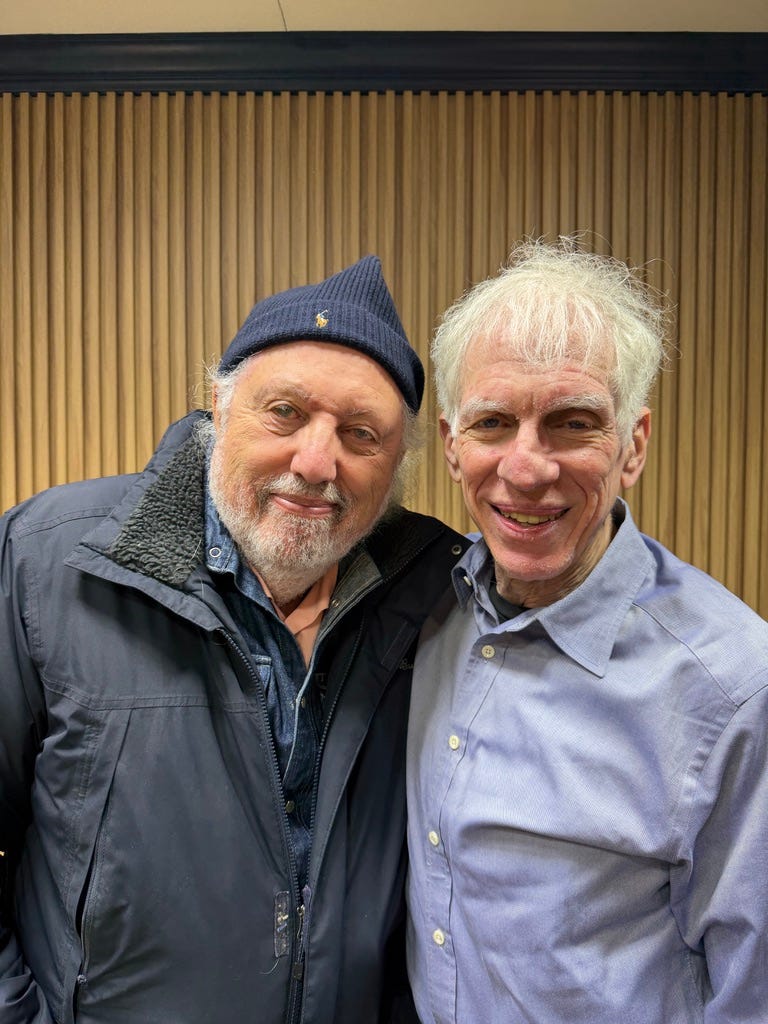
1967 - Jack Wolf and Arthur Engoron
L-R - Jackie and
Artie at a pizza joint on East 42nd Street, New York City, on Sunday, January
18, 2026
1967 - Art Engoron - I am now working for NAM (National Arbitration and
Mediation) as a, what else?, arbitrator and mediator. I’m honored to join
their roster of legal heavy-hitters who decide (arbitrate) or help settle
(mediate) cases that otherwise likely would need to be litigated (slow,
costly, exasperating). If you submit a case, you can request me (and I would
be tickled pink if you did). NATIONAL ARBITRATION AND MEDIATION
1971 - Dwight Devon - Deceased
Fan Mail
1963 (Mark Friedman) - ❤️
1964 (Richard Ilsley) - ❤️
1965 (Malcolm McNeill) - “Thanks for all you do, Art.”
1967 (Jill Simon Forte) - “Thanks for giving me memories that make me happy … 😊”
1967 (Robert Jacobs) - “Many interesting people passed through Wheatley and
have changed the world! Keep up the good work!”
1967 (Barbara Smith Stanisic) - ❤️
1968 (Barbara Wolowitz) - 👌🏻
1970 (Lyn Goldsmith) - ❤️
1970 (Wendy Strickman Hoffman) - ❤️
1974 (Melanie Artim) - ❤️
???? (“Jon” - Bagdon? Silver?) - ❤️
The Official Notices
All underlined text is a
link-to-a-link or a link-to-an-email-address. Clicking anywhere on underlined
text, and then clicking on the text that pops up will get you to your on-line
destination or will address an email.
The Usual Words of Wisdom
Thanks to our fabulous
Webmaster, Keith Aufhauser (Class of 1963), you can regale
yourself with the first 248 Wheatley School Alumni Association Newsletters
(and much other Wheatley data and arcana) at our website:
The Wheatley School Alumni Association Website
Also thanks to Keith is
our search engine, prominently displayed on our home page: type in a word or
phrase and, wow!, you’ll find every place it exists in all previous
Newsletters and other on-site material.
I edit all submissions,
even material in quotes, for clarity and concision, without any indication
thereof. I cannot and do not vouch for the accuracy of what people tell me,
as TWSAA does not have a New Yorker style fact-checking
department.
We welcome any and all
text and photos relevant to The Wheatley School, 11 Bacon Road, Old Westbury,
NY 11568, and the people who administered, taught, worked, performed, and/or
studied there. Art Engoron, Class of 1967
Closing
That’s it for The Wheatley School
Alumni Association Newsletter # 252. Please send me your autobiography before
someone else sends me your obituary.
Art
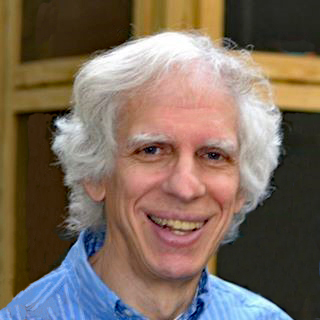 Arthur Fredericks Engoron, Class of 1967
ARTENGORON@GMAIL.COM
WWW.WHEATLEYALUMNI.ORG
646-872-4833